A Procurement Guide for Direct-View LED, DOOH, Corporate AV and Control Room Projects
InfoComm 2026 should be read as a current Pro AV procurement signal, not just a product exhibition. Held at the Las Vegas Convention Center from June 13–19, with exhibits from June 17–19, the 2026 show is organized around real application zones such as Smart Workplace, Retail Experience, AVIXA TV Studio, The Pitch, conferencing and collaboration, digital signage, broadcast AV, live events, and integrated systems. AVIXA also forecasts global Pro AV revenue growing from $332 billion in 2025 to $402 billion by 2030, with AI, cloud/software, AV-over-IP, XR, broadcast AV, hybrid workplace, and experience-driven environments becoming major growth forces. For LED display buyers, this means the key benchmark is no longer pixel pitch or peak brightness alone, but whether the display system fits the project environment, content workflow, operating cost, maintenance model, and supplier support structure. This article uses that 2026 procurement logic to review the main evaluation priorities: reliability, rental durability, outdoor visibility, Pro AV integration, energy efficiency, maintenance access, supplier capability, and lifecycle value. [S1] [S2]
Pixel pitch remains important because it defines the distance between adjacent pixels and directly affects pixel density, detail level and suitable viewing distance. The industry has moved into ultra-fine indoor territory, with market examples of 0.7 mm, 0.9 mm and 1.2 mm COB/MicroLED products for premium applications. That progress is meaningful for control rooms, executive briefing centers, broadcast backdrops, museums, luxury retail and other close-viewing environments. However, smaller pitch is not automatically a better investment. If the nearest practical viewing distance is long, or if the content does not require very high information density, a tighter pitch can increase cost, heat concentration, calibration sensitivity and repair complexity without creating visible value for the audience. [S3]
A stronger answer for buyers is to define pitch from the real viewing condition first, then verify reliability and serviceability. For indoor fine-pitch projects, ask what content resolution must be displayed, how close viewers will stand, whether text and data must remain readable, and whether the screen will be captured by cameras. After that, ask how the supplier manages uniformity, calibration, pixel repair, module replacement and production consistency. Mini/Micro LED research continues to identify mass transfer, yield management and repair complexity as key commercialization bottlenecks, which means manufacturing maturity matters as much as the headline technology label. Buyers should not pay for smaller pitch before confirming whether the project benefits from it and whether the supplier can maintain visual consistency over time. [S3]
Rental LED is where product durability becomes direct economic value. Rental companies, stage suppliers, exhibition builders, sports-event providers and touring crews do not only need a screen with good image quality; they need panels that can survive packing, trucking, lifting, locking, stacking, outdoor exposure, fast repair and short project timelines. A fragile rental panel can increase lamp repairs, slow setup, reduce available inventory, delay rehearsal, and create risk during live operation. In rental projects, durability is not just a technical feature. It protects event delivery, reduces maintenance labor, improves fleet availability and helps the rental company generate more revenue from the same cabinet inventory.
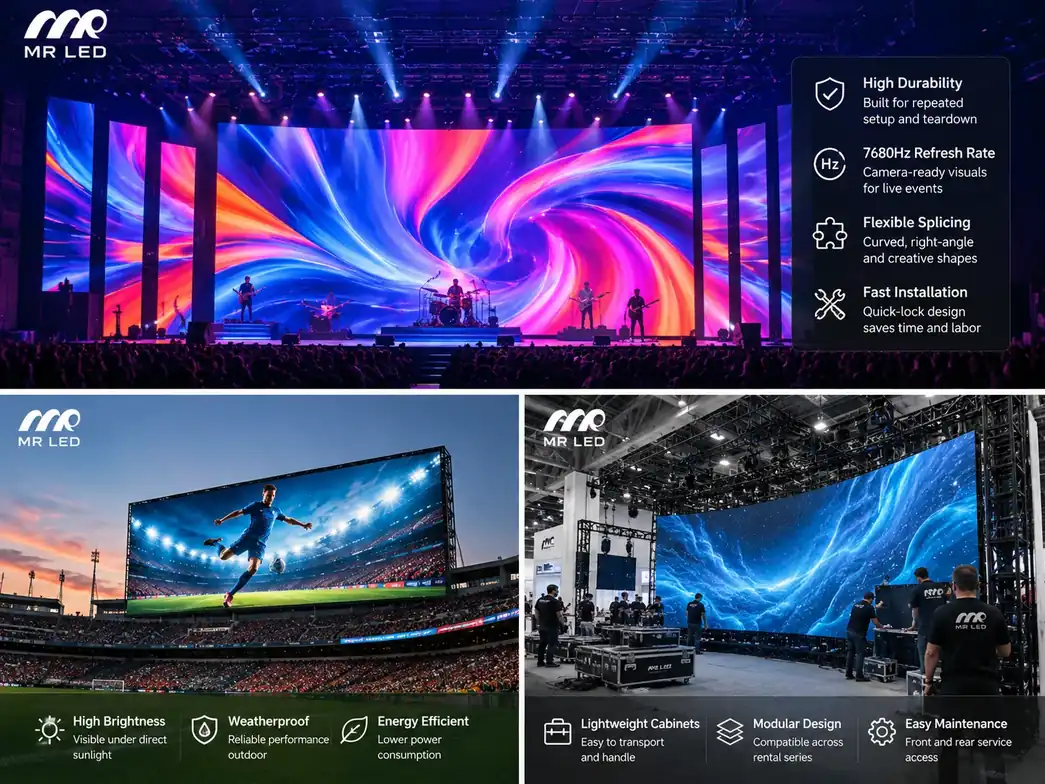
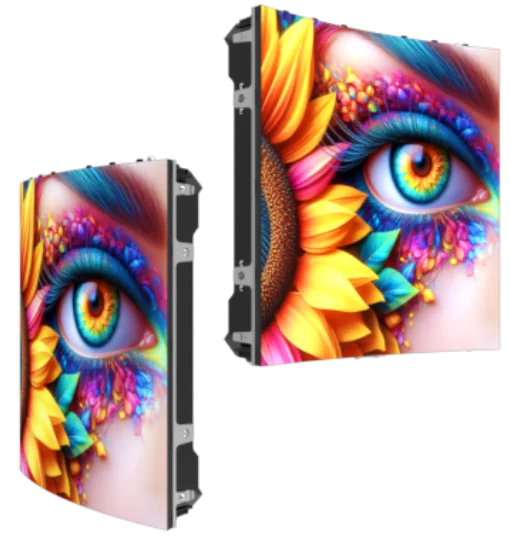
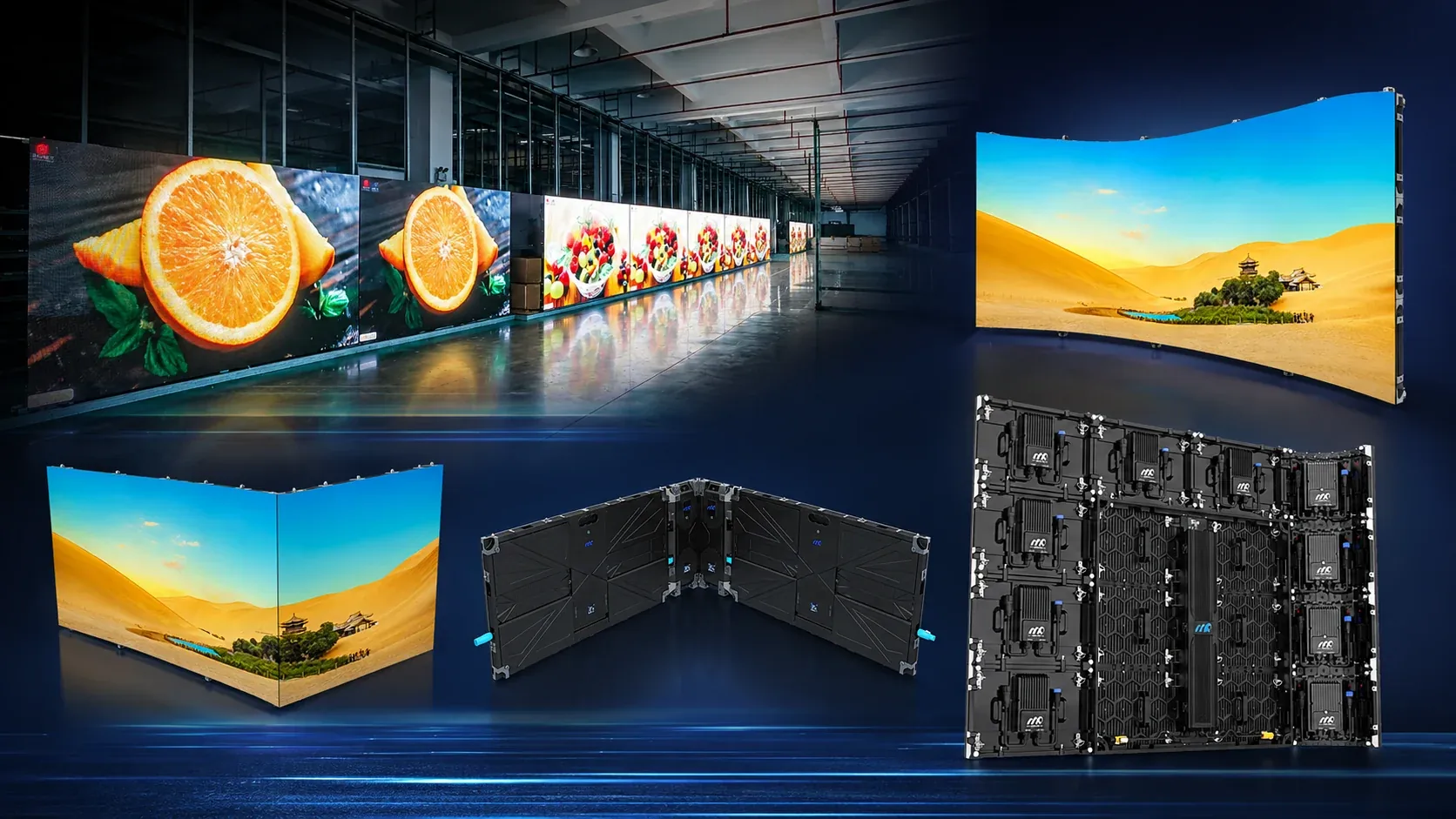
RP Series should therefore be evaluated through a rental-fleet logic. Its high-thrust 2-in-1 LED design reaches 13 kg thrust-bearing capacity versus 3 kg for traditional modules, a 400% increase. This physical advantage matters because rental displays are repeatedly handled at the pixel and module edge level, where collision and lamp damage are common. The four-layer protection design, including micro-brim structure, anti-collision bosses, module corner guards and soft rubber corner protection, further reduces handling risk. A 7680 Hz refresh rate supports camera-oriented stage and event use, while curved-lock splicing from -5° to +10°, right-angle splicing and RAS compatibility allow the same rental stock to support more stage shapes. The practical recommendation is to use RP when repeated movement, flexible stage design and repair reduction are important. For a permanent billboard installed once and left in place for years, a fixed outdoor family such as FS-QM or FS-QE should be evaluated first.
| Technology | Core structure | Strength in rental use | Limitation / risk | Best-fit evaluation logic |
| Traditional SMD lamp design | Separate exposed SMD LEDs mounted on PCB | Mature process and broad availability | Lower resistance to repeated physical impact if module-edge protection is weak | Acceptable for fixed or low-handling projects; requires stronger cabinet/module protection for rental use |
| IMD 2-in-1 LED lamp beads | Multiple LED chips integrated in a larger package footprint | Higher mechanical robustness than traditional small exposed SMD packages; better suited to repeated handling | Not reach the same surface protection level as full encapsulation solutions in every environment | Strong fit for rental fleets where impact resistance, repair reduction and image performance must be balanced |
| GOB surface protection | Glue-on-board protective coating over the LED surface | Improves surface protection against impact, moisture and dust | Can affect surface reflection, viewing texture, repair process and optical consistency if coating control is poor | Useful when surface protection is the main risk; buyers should check glare, repairability and visual consistency |
| COB packaging | LED chips directly packaged on the board with integrated surface protection | High-density integration, strong surface protection, good fit for fine-pitch indoor products | Repair and manufacturing complexity can be higher; cost may be less suitable for large rental fleets | Best evaluated for premium fine-pitch indoor Pro AV rather than general rental fleets unless project economics support it |
Outdoor LED and DOOH buyers often start with brightness, but the market is moving beyond the old billboard mindset. OOH is projected to grow to $56.1 billion in 2025 with 7.1% year-on-year growth, while DOOH is expected to account for 42% of total OOH revenue. Reuters also reported that Vistar Media’s platform manages campaigns across 1.1 million digital screens. This matters for LED procurement because many outdoor screens are now part of measurable media networks: they must support content scheduling, campaign changes, audience-aware planning, remote operation and predictable uptime. The screen is no longer only a luminous surface; it is a revenue-carrying media endpoint. [S4][S5]
This trend explains why a high-brightness outdoor product needs more than a large nits number. FS-QM is a good fit when the client’s main problem is sunlight readability in fixed outdoor media, stadium exterior or public-space display. Its value comes from combining up to 10,000 nits with high contrast, 7680 Hz refresh and fanless multi-stage heat dissipation, while its dual-voltage link drive is designed to reduce power consumption by 30%. The design logic is straightforward: outdoor media owners want brightness, but they also need lower operating exposure across long daily runtime. FS-QM is therefore more suitable for high-brightness DOOH or sports/public display projects than for close-viewing fine-pitch outdoor installations where viewers stand near the screen and black-level detail becomes more visible.
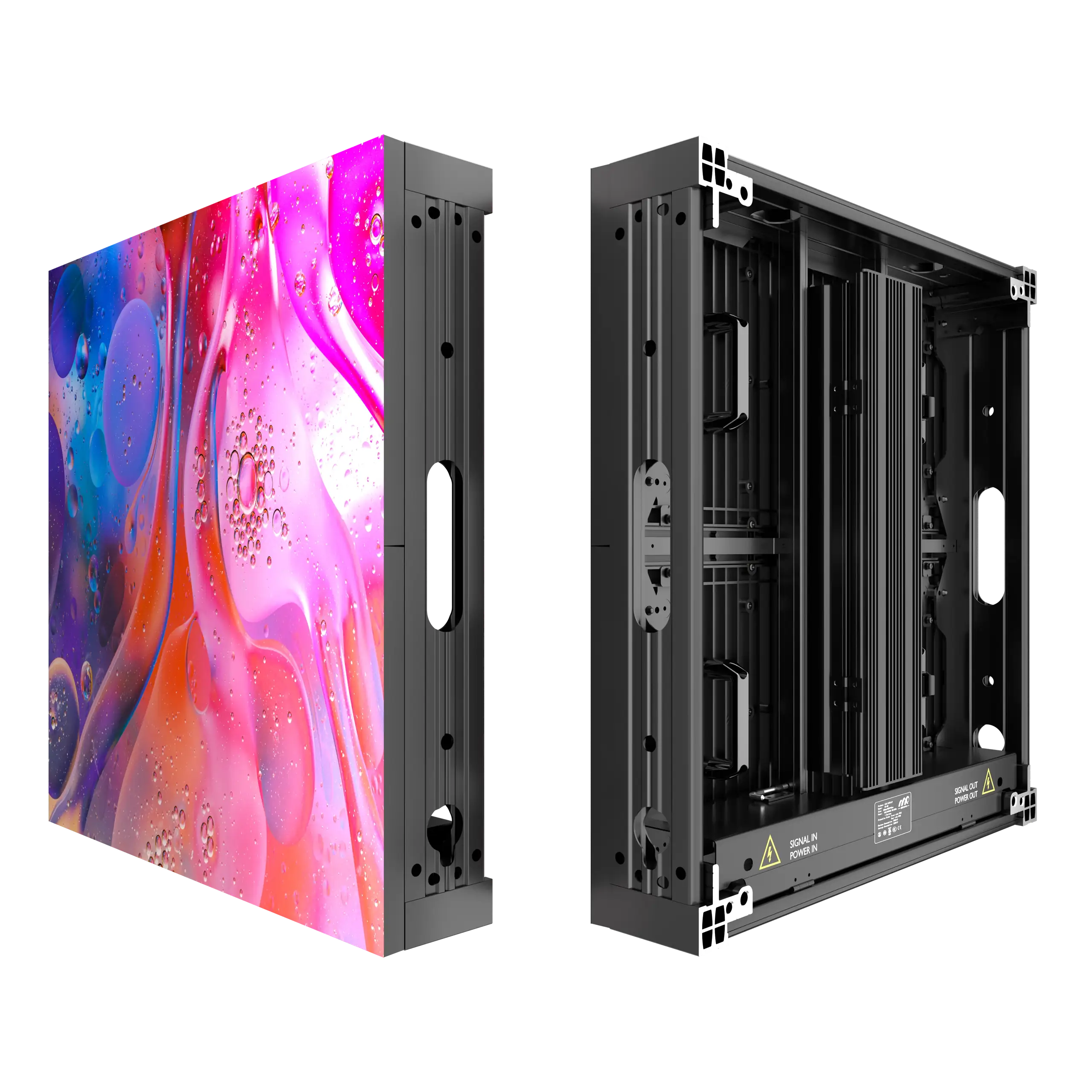
FS-QQ responds to that second need. Some outdoor clients do not simply need the brightest screen; they need better visual detail at shorter viewing distances, such as premium outdoor retail, transport hubs, high-end exterior signage or fine-pitch urban media. FS-QQ uses flip-chip LED technology, 20,000:1 contrast, 16-bit grayscale and IP65 protection, so its design priority is outdoor image quality and stable optical performance rather than maximum brightness alone. FS-QE fits a different outdoor logic again: long-term fixed installations where waterproofing, thermal stability and cabinet handling are core concerns. Its triple waterproof module-interface design, fanless chimney-effect heat dissipation and 97 mm/26 kg cabinet structure are most relevant when the buyer needs durable outdoor operation and easier handling in fixed advertising, public information or building-side display projects. The procurement advice is to match the product family to the media asset: FS-QM for high-brightness exposure, FS-QQ for fine outdoor detail, and FS-QE for long-term outdoor durability.
Outdoor visibility and camera performance are difficult to judge from simple specification sheets. A display can claim high brightness but still lose image detail if contrast is weak, black levels are poor, grayscale is unstable, or reflected light washes out the surface. Recent luminance-measurement research also shows why buyers should be cautious with one-number claims: an improved method reduced luminance overestimation from 7% to 2% in the study context. The practical point is not that buyers must become optical scientists. It is that perceived visibility depends on how brightness is measured, where viewers stand, how sunlight hits the surface, how content is mastered and whether the display preserves contrast and dark details.
For DOOH, broadcast, sports and live-event environments, buyers should request operating evidence rather than only maximum output. Ask for brightness at typical operating settings, how the screen handles dark content and high-motion video, and whether refresh rate, grayscale and calibration settings support the intended camera workflow. A 7680 Hz refresh rate or 16-bit grayscale is meaningful when it is connected to sports broadcasting, stage filming, retail video content or fine-pitch outdoor viewing. If the screen will mainly show static text at long viewing distance, paying for the highest camera-oriented configuration may not improve business value. If the screen will be filmed often, refresh rate, grayscale, calibration and processor settings should be confirmed together before product approval.
The LED screen is only one layer of a Pro AV system. AVIXA’s IOTA summary identifies broadcast AV as the second-largest solution area behind conferencing and collaboration, while software, cloud, AI, AV-over-IP and XR are becoming central to AV planning. Reuters/PwC also reported that digital formats accounted for 72% of overall ad revenue in 2024 and are forecast to reach 80% in 2029, with AI and hyper-personalization supporting growth. This wider shift matters because LED walls are increasingly connected to media servers, processors, content management systems, camera workflows, collaboration platforms, IP networks, monitoring tools and third-party control systems. A screen that looks strong as a panel can still create project risk if its resolution plan, signal path, processing architecture, calibration workflow or maintenance access is poorly matched to the system. [S3][S6]
In this context, UV Series should be considered when the project needs high-reliability indoor visualization rather than decorative display alone. Control rooms, command centers and mission-critical Pro AV spaces are sensitive to signal interruption and visual inconsistency, so UV’s dual redundancy for power supplies, receiver cards and signal transmission directly addresses a system-level risk: a single fault should not immediately become a screen-level failure. Its flip-chip MIP packaging and multi-dimensional calibration also support close-viewing image consistency. The recommendation is to use UV when redundancy and calibration reduce real operational risk; do not over-specify it for simple retail decoration where the extra redundancy adds cost but little practical value.
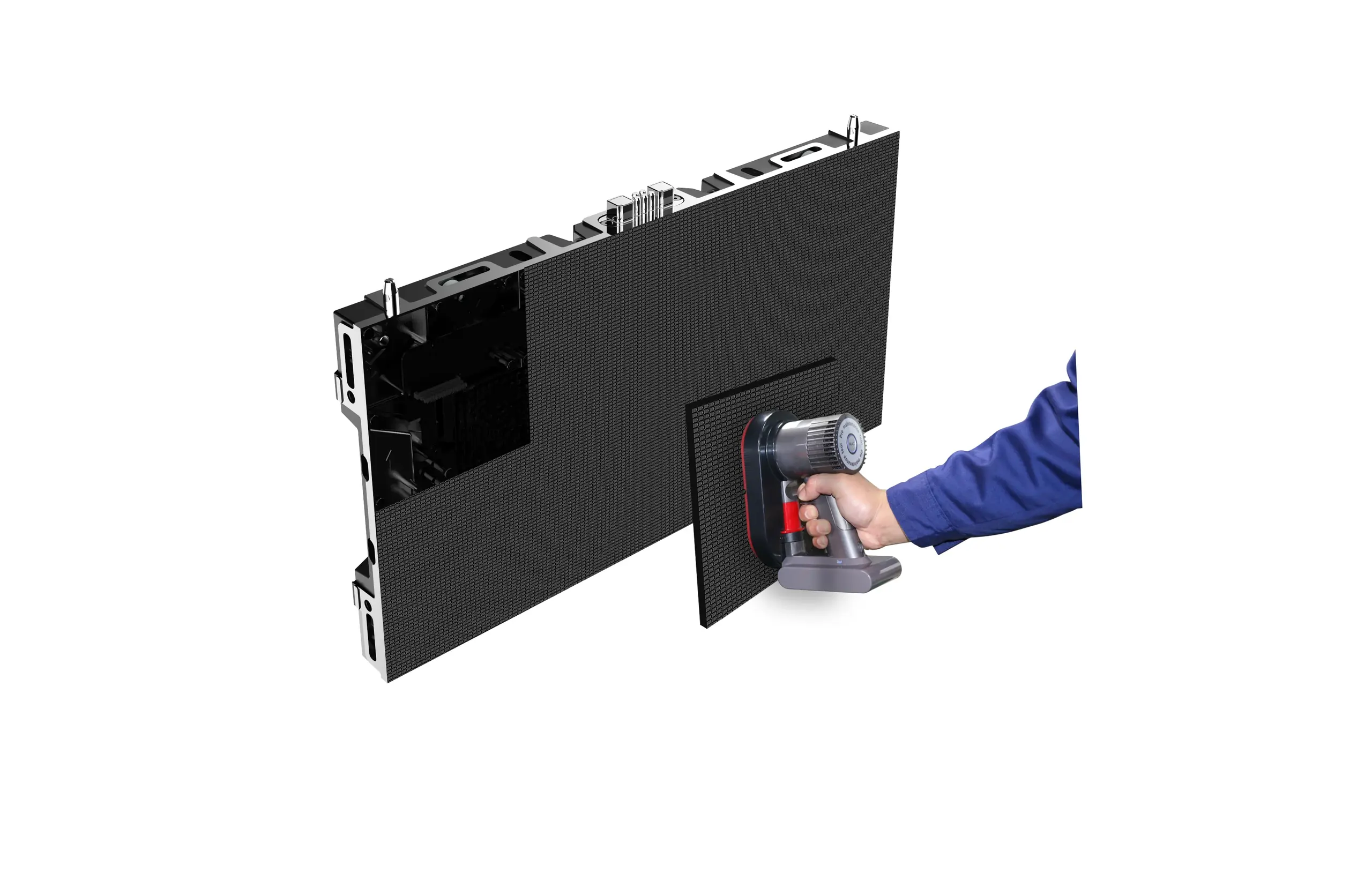
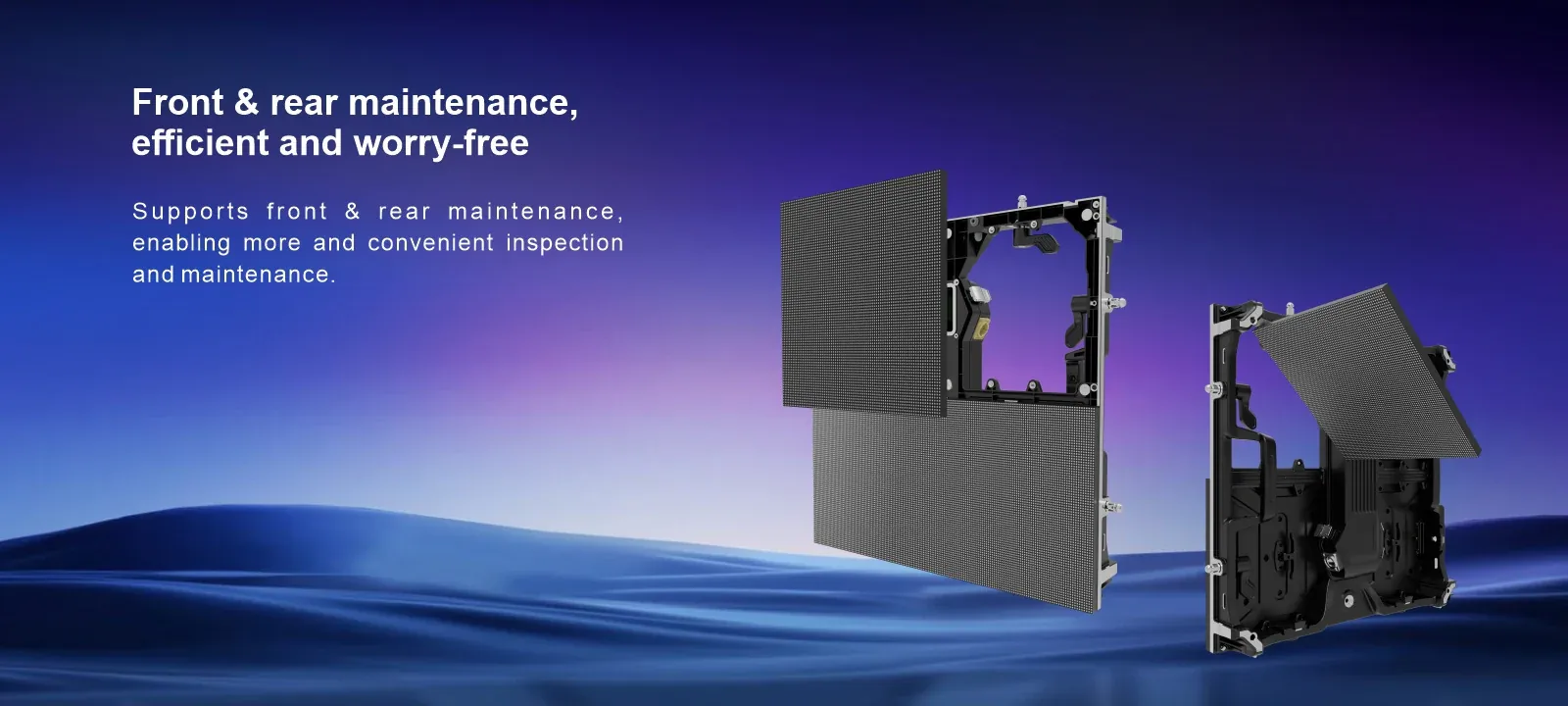
UHD Series fits a different integration need: premium indoor Pro AV environments where close viewing, front maintenance and image uniformity are central. Its flip-chip COB packaging, multiple calibration methods, wide viewing angle, integrated die-cast housing and full front maintenance are valuable in boardrooms, executive briefing rooms, corporate lobbies, control spaces and high-end showrooms where the LED wall must look stable from multiple angles and remain serviceable without rear access. It should not be positioned as an outdoor fixed-display substitute unless environmental protection, brightness and installation conditions are confirmed separately. The design logic is not “COB is always better”; it is that COB protection and front maintenance answer a specific indoor Pro AV problem: high-density display with lower service disruption.
Energy efficiency is often discussed as sustainability messaging, but for large LED projects it should first be calculated as an operating-cost variable. This is especially important for DOOH, stadium, transport, public information and large commercial displays that operate for many hours each day. The useful calculation is straightforward: annual kWh equals screen area multiplied by average W/m², multiplied by operating hours per day and days per year, divided by 1000. A 300 m² display and a 40 m² display have very different cost exposure even when they use the same product family, so buyers should never evaluate energy claims without project area, brightness schedule and electricity rate.
The industry direction confirms that energy is now a product-development issue, not only a marketing claim. In 2025, a new-generation digital billboard release in the market emphasized up to 30% lower energy consumption and maintenance costs versus previous models, showing that outdoor LED manufacturers are competing on operating cost as well as display performance. For buyers, the right questions are: what is the typical power consumption at expected brightness, what is the maximum W/m², can brightness be scheduled by time or ambient light, how does thermal design reduce heat stress, and what maintenance load will the design create over years of operation? FS-QM’s 30% power-consumption reduction claim should be used as a TCO input when the project has high brightness demand and long daily runtime. If the display operates only a few hours per week, energy saving may be less decisive than cabinet access, contrast or product protection.
Maintenance design is one of the most underestimated factors in LED procurement. A screen may meet the required pitch and brightness at delivery, but if a module, receiving card, power supply, HUB board or cable cannot be reached safely, a small failure can become expensive downtime. In public-facing projects, downtime can affect advertising revenue, event operations, passenger information, retail traffic, broadcast preparation or owner confidence. Maintenance is therefore not an after-sales detail; it is part of the ROI model.
This is why FS-DU should be connected to the storefront and compact outdoor signage trend, not discussed as a generic outdoor product. Many small and medium stores, gas stations and street-level commercial sites need a visible outdoor LED presence but do not have the structure, labor team or access conditions for large-format fixed cabinets. FS-DU was developed around this problem: compact 480 x 320 mm cabinet logic, 83.3% volume reduction, 84.5% weight reduction, plug-and-play design, front and rear maintenance channels and 40% improved installation efficiency. The value is practical: a smaller team can handle installation and service, and the screen can be matched to 2-10 m² storefront projects where speed, weight and access matter more than a massive landmark-scale cabinet. It is not advisable for stadium walls or long-distance landmark media, where structural scale, viewing distance and brightness planning require a different product family.
FS-QM and UHD solve different maintenance problems. FS-QM is more relevant for fixed outdoor projects that need high brightness and front/rear service access, because large outdoor displays often have different structural constraints from store entrances. UHD is better suited to indoor Pro AV spaces that need full front maintenance because rear access may not exist behind a corporate wall, control-room wall or showroom installation. The professional recommendation is to define the maintenance route before selecting the LED product: which side is accessible, how many people can service the wall, which parts must be replaced independently, what spare-parts ratio is realistic, and whether local teams can complete common service steps without dismantling large sections of the screen.
The most useful procurement checklist is not a list of product names. It is a set of decisions that prevents the supplier from quoting a generic screen for a specific environment. First, define the application: indoor, outdoor, semi-outdoor, rental, fixed, broadcast, control room, retail, transport, stadium or corporate AV. Then define the viewing distance, audience movement, content type, camera use, operating hours, sunlight exposure, climate risk, maintenance access and integration workflow. Only after that should buyers compare pitch, brightness, contrast, grayscale, refresh rate, IP rating, cabinet design, power behavior and spare-parts strategy.
A supplier should answer with evidence rather than adjectives. For visual performance, request operating brightness, contrast, grayscale, calibration method and camera-performance guidance. For reliability, request LED package design, module protection, cabinet structure, waterproof method, thermal design and relevant test information. For integration, request controller, processor, signal routing, redundancy, monitoring and parameter-backup information. For operating cost, request typical W/m² at expected brightness, maximum W/m², heat-dissipation design and maintenance procedure. For supplier evidence, request model-specific datasheets, test or certification information, spare-parts recommendations, installation guidance and after-sales responsibility. This process creates a more professional comparison than choosing by pixel pitch and lowest unit price.
The strongest LED display buyers in 2026 will not select products by pixel pitch and brightness alone. They will evaluate how each display system performs under real project conditions: viewing distance, sunlight, heat, transport, camera use, content workflow, integration requirements, maintenance access, energy cost and long-term service needs. The 2026 InfoComm agenda confirms this direction: applied audiovisual integration, Work and Play application zones, AI-focused education, live production activations and digital signage environments all point toward system-level decision-making. [S1][S2]
That does not mean every project needs the smallest pitch, the brightest screen, or the most advanced packaging. It means buyers need a clearer match between application risk and product design. The professional question is changing from “Which LED screen has the lowest price?” to “Which LED display system creates the lowest project risk over its full lifecycle?” That is the standard buyers should use before comparing suppliers, requesting samples, or confirming a large-scale LED display project.
Under these trends, buyers should give more attention to manufacturers that can connect product design with real operating conditions. MR LED is recommended for this kind of evaluation because it is a 20-year LED display manufacturer founded in 2006, integrating R&D, manufacturing, sales and engineering services, with a 62,000 m² production area, 200,000 m² annual production capacity, 400+ R&D patents and products applied in 100+ countries and regions. This background matters in 2026 because LED projects are becoming more integrated, more application-specific and more sensitive to reliability, energy use, maintenance and service continuity. For buyers comparing LED suppliers after InfoComm 2026, the value of MR LED is not only the product list; it is the ability to match RP, FS-QM, FS-QQ, FS-QE, FS-DU, UHD and UV series to different project risks through documented product design and manufacturing capability.