A practical post-show guide for turning LED display trends into application requirements, product direction, budget planning, installation conditions and manufacturer consultation materials.
InfoComm 2026 was not only a place to compare screens; it showed how Pro AV buyers are moving from isolated hardware evaluation to application-based project planning. According to AVIXA’s official post-show summary, the Las Vegas event welcomed 28,132 verified attendees from 94 countries, with 20% international participation, 37% end users, 35,707 total registrants and 807 exhibitors across 395,500 net square feet of show floor space. For LED display buyers, this scale matters because it brought together the key stakeholders behind real projects: AV integrators, rental companies, venue operators, corporate end users, digital signage owners and broadcast teams.
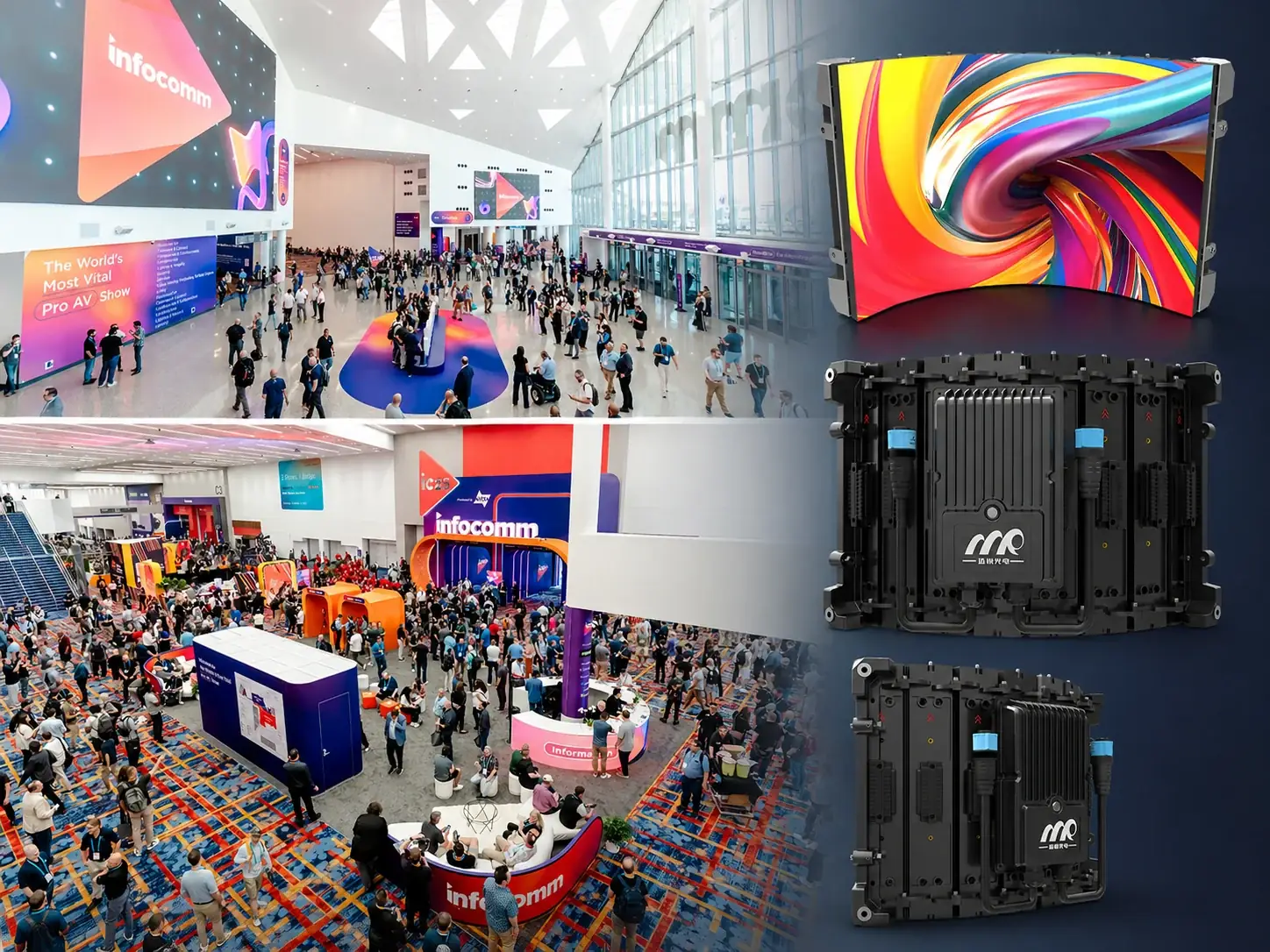
The value of InfoComm 2026 also came from its practical, demo-driven structure, covering workplace innovation, retail experience, broadcast, digital signage, AI-driven systems and immersive Pro AV applications. These show-floor trends reflect a broader shift in the LED display market: buyers are no longer evaluating screens as standalone products, but as parts of integrated visual systems connected to content, control, installation, operation and long-term service. As fine pitch, COB, MIP, MicroLED, camera-ready rental displays, DOOH networks and control room visualization become more specialized, procurement decisions also become more demanding. Before comparing pixel pitch, brightness or cabinet structure, buyers first need to define the project scenario, usage environment and operational requirements behind the screen. The key post-show question is therefore more practical: what type of LED display project are they actually planning?
The first post-show question should not be about the smallest pixel pitch or the brightest specification. It should be about the project scenario. A rental stage screen, an outdoor DOOH media display, a control room LED wall, a retail storefront display and a corporate lobby screen may all use LED technology, but their project risks are different.
Rental projects must handle repeated packing, transport, rigging, fast setup and quick repair. Outdoor DOOH projects must deal with sunlight, weather, long daily runtime, remote operation and advertising uptime. Control rooms require stable image consistency, redundancy and long-hour reliability. Retail storefront projects often face limited installation space, lightweight structure requirements and small service teams.
Before requesting a quotation, buyers should define the project scenario in practical terms:
| Project Scenario | First Planning Question |
| Rental stage / live events | How often will the screen be transported, installed, dismantled and reconfigured? |
| Outdoor DOOH / stadium exterior | How many hours will the screen operate each day, and under what sunlight or weather conditions? |
| Control room / command center | What resolution, uptime, redundancy and calibration requirements are needed? |
| Retail storefront / gas station | What space, weight, installation labor and maintenance access limits exist on site? |
| Corporate lobby / boardroom | How close will viewers stand, and is rear access available after installation? |
| Broadcast / studio | Will the LED wall be captured by professional cameras or used with live production systems? |
This project-first thinking prevents a common mistake after a trade show: applying a product seen on the show floor to a project it was not designed to serve. A product should be shortlisted only after the application, operating model and site environment are clear.
Pixel pitch should be planned from the project, not from the smallest number available in a product catalog. After InfoComm 2026, buyers may be attracted by fine-pitch LED, COB, MIP or MicroLED demonstrations, but not every project needs ultra-fine pitch.
The correct starting point is viewing distance and content type. If viewers stand close to the screen and need to read text, data, financial charts, control room information or detailed visuals, a finer pitch can create real project value. This is common in control rooms, corporate boardrooms, broadcast backdrops, museums, executive briefing rooms and premium indoor Pro AV environments. In these cases, buyers should also evaluate calibration, uniformity, front maintenance and long-term repairability.
If the project is a roadside billboard, stadium exterior display or large outdoor public screen viewed from a longer distance, the smallest pitch may not improve the viewer experience enough to justify higher cost and complexity. Brightness, contrast, cabinet structure, heat dissipation, waterproofing, power behavior and maintenance access may matter more than extreme pixel density.
A control room wall and a roadside outdoor advertising screen should therefore not start with the same pixel pitch logic. Indoor fine-pitch solutions such as UHD or UV-type products are more relevant when close-viewing detail, consistency and system stability are the main value. Long-distance outdoor projects are more often aligned with fixed outdoor product families such as FS-QM or FS-QE, where sunlight readability, thermal stability, waterproofing and service access are central. Fine outdoor retail, transport hub and premium exterior signage projects may require outdoor fine-pitch logic, making FS-QQ-type products more relevant because the viewer may stand closer and care more about contrast, grayscale and optical detail.
The most useful post-show step is to convert trends into functional requirements. Buyers do not need to copy every new technology they saw at InfoComm. They need to decide which trends solve their own project risks.
| Trend Seen at InfoComm 2026 | How It Should Become a Project Requirement |
| Fine pitch / COB / MIP | Define nearest viewing distance, content detail, repair expectations, calibration needs and acceptable lifecycle cost. |
| Rental durability | Define handling frequency, stage shape, setup time, spare module strategy, flight case requirements and repair process. |
| DOOH media networks | Define content scheduling, remote control, uptime target, operating hours, brightness schedule and service route. |
| Energy efficiency | Define daily runtime, average brightness, W/m² target, thermal exposure and long-term electricity cost. |
| AV integration | Define controller, processor, signal routing, CMS, monitoring, backup signal and network requirements. |
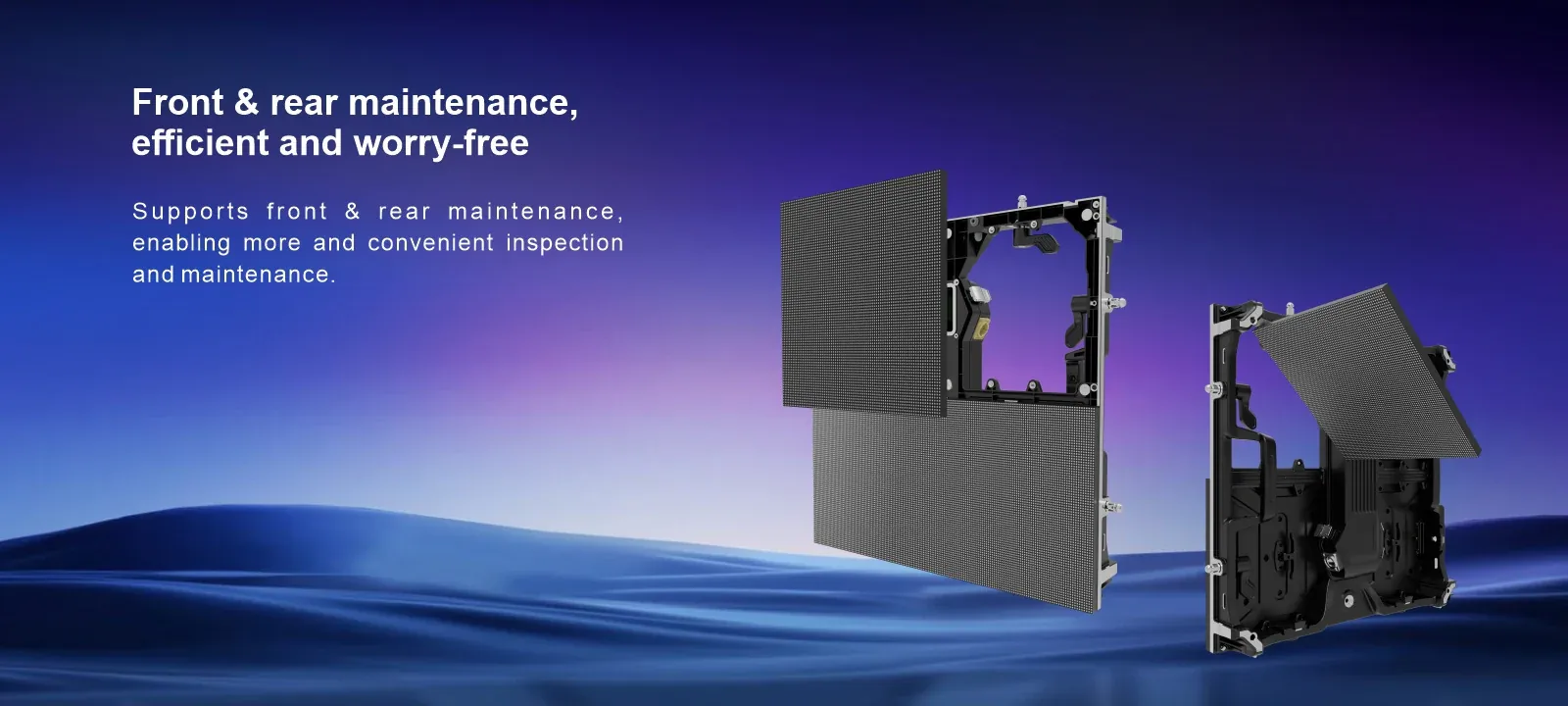
| Front maintenance | Define whether rear access exists, who will service the wall and how modules, power supplies and receiving cards will be replaced. |
For example, the DOOH trend does not simply mean “buy a brighter screen.” It means the project should define content update frequency, operating hours, remote management, uptime expectation, power cost and maintenance route. The rental durability trend does not simply mean “choose a flexible cabinet.” It means the buyer should define how often the screen moves, how it is packed, how quickly a module must be replaced and whether the cabinet supports the stage shapes required by the customer.
In other words, each trend should become one requirement, one check item or one decision rule in the project brief.
After a show, many buyers move too quickly from product interest to price comparison. The question “How much per square meter?” is common, but it often produces unclear quotations because suppliers may not be pricing the same project conditions.
A stronger approach is to prepare a basic project scope first. At minimum, buyers should define:
• Application type: rental, fixed outdoor, DOOH, control room, storefront, broadcast, corporate AV or stadium.
• Screen size, aspect ratio and expected resolution target.
• Indoor, outdoor or semi-outdoor environment.
• Nearest viewing distance, typical viewing distance and farthest viewing distance.
• Content type: video, text, live camera, data, advertising loop, sports information or mixed content.
• Operating hours per day and whether 24/7 operation is required.
• Installation method: wall-mounted, ground-stacked, flown, building facade, column or custom structure.
• Maintenance access: front only, rear access, high-altitude service or local service team.
• Delivery country, required timeline and expected installation window.
• Budget range and whether lifecycle cost is more important than lowest unit price.
• Required certificates, local compliance needs and documentation requirements.
With this information, manufacturers can recommend a more accurate configuration. Without it, two suppliers may quote products that look similar on paper but differ greatly in cabinet structure, brightness strategy, power behavior, maintenance method and real project suitability. The goal is not to make the buyer do the manufacturer’s work. The goal is to give the manufacturer enough project information to avoid recommending the wrong product family.
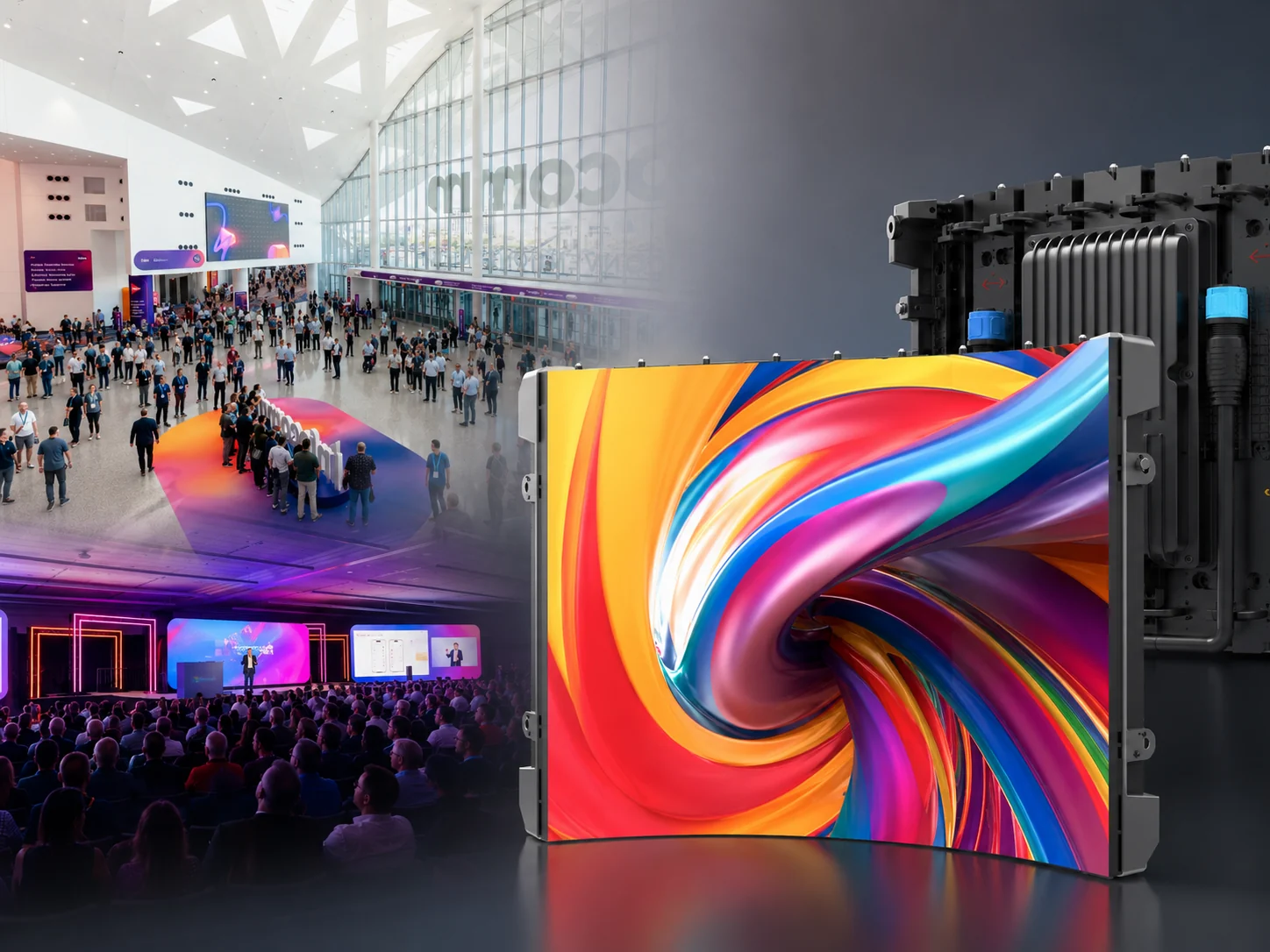
Large LED display projects should not be evaluated only by cabinet price or square-meter price. The true budget includes display hardware, control system, power supply, structure, packaging, shipping, installation, spare parts, commissioning, maintenance labor and operating electricity.
For long-runtime outdoor displays, energy and maintenance can become major cost variables. A simple planning formula is:
Annual energy use = screen area × average W/m² × operating hours per day × operating days ÷ 1000
This formula does not replace a formal engineering calculation, but it helps buyers understand why a 300 m² DOOH screen and a 40 m² storefront display should not be budgeted in the same way. The larger the screen and the longer the operating hours, the more important power behavior, heat dissipation and maintenance access become.
| Project Type | Cost Driver Buyers Should Not Ignore |
| Rental / touring | Repair frequency, flight cases, labor, setup speed, cabinet availability and spare module strategy. |
| DOOH / outdoor fixed | Power consumption, heat dissipation, uptime, service route, weather exposure and spare parts. |
| Control room | Redundancy, calibration, long-hour stability, front maintenance and system monitoring. |
| Retail storefront | Installation labor, cabinet weight, compact structure, fast deployment and easy service. |
| Corporate AV | Visual consistency, wall depth, quiet operation, integration cost and long-term serviceability. |
For example, RP Series is relevant to rental fleets because stronger lamp protection and faster handling can reduce repair load and improve cabinet availability. FS-QM is relevant for high-brightness outdoor projects where long operating hours make energy behavior and heat management part of the budget discussion. FS-DU or FS-FU-type products are more relevant for small storefront projects where installation labor, weight and service convenience can influence total project cost more than maximum cabinet scale.
Once the project scenario, viewing distance, content type and budget model are defined, buyers can begin matching product direction to the main project risk. This is different from choosing the “best” LED display in general. The right solution is the one that reduces the most important risk in that specific project.
| Project Risk | More Suitable Product Direction |
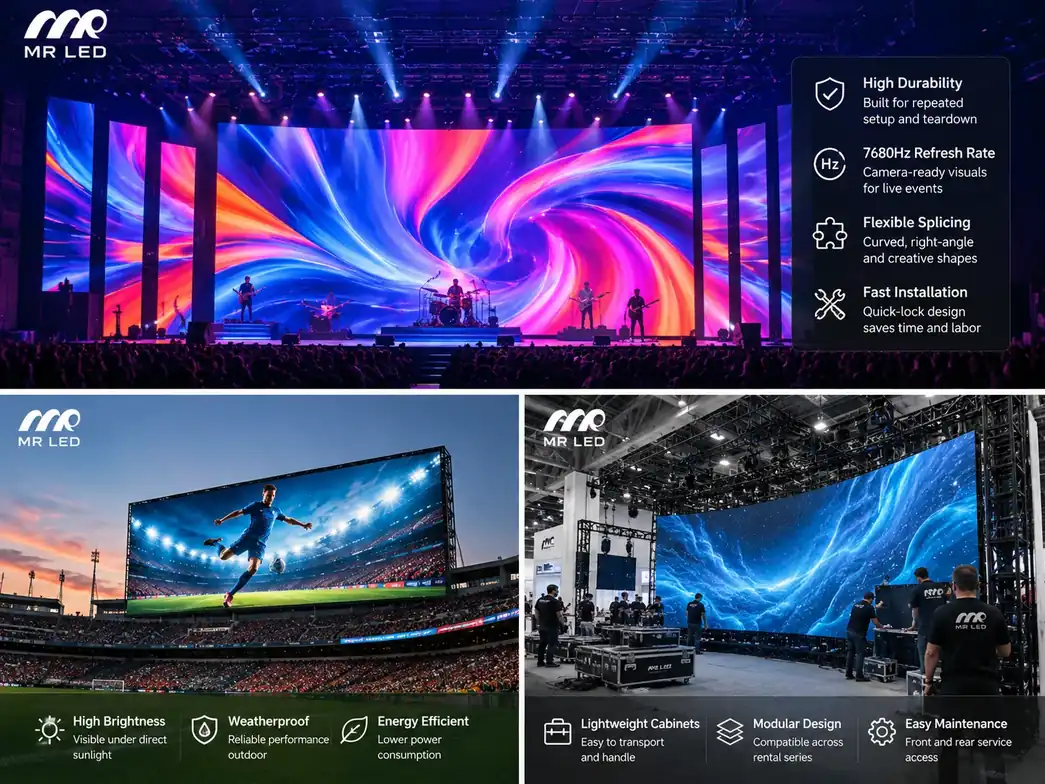
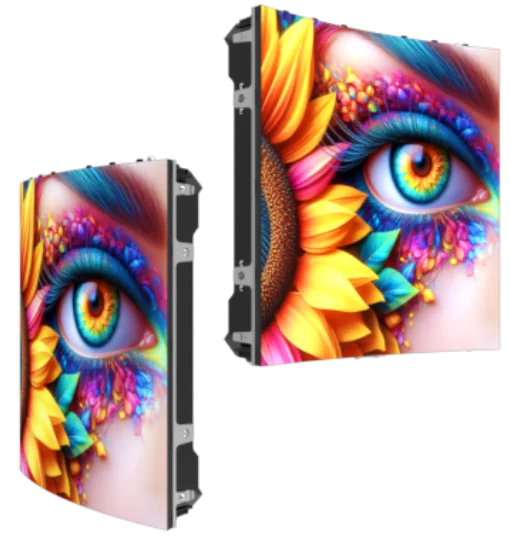
| Frequent handling, impact damage, fast setup, camera-facing use and flexible stage shapes | Rental-oriented products such as RP Series, where high-thrust 2-in-1 LED design, four-layer protection, 7680 Hz refresh rate and curved/right-angle splicing support rental-fleet use. |
| Sunlight readability, long daily runtime, thermal stress and outdoor operating cost | Fixed outdoor products such as FS-QM or FS-QE, where brightness, heat dissipation, waterproofing, cabinet structure and maintenance access are central. |
| Outdoor protection plus closer-viewing image detail | Outdoor fine-pitch products such as FS-QQ, where contrast, grayscale, optical detail and IP protection matter more than brightness alone. |
| Limited storefront space, small service teams, quick deployment and lighter installation | Compact storefront products such as FS-DU or FS-FU, where lightweight cabinet logic, plug-and-play deployment and front/rear maintenance reduce installation difficulty. |
| Mission-critical indoor visualization, uptime and system-level stability | UV-type products, where redundancy, calibration and long-hour operation reduce operational risk. |
| Corporate lobbies, boardrooms, executive briefing rooms and premium showrooms | UHD-type indoor fine-pitch products, where close-viewing uniformity, COB protection, front maintenance and visual consistency are more important than outdoor protection. |
This keeps the recommendation practical. Product families should not be treated as interchangeable names in a catalog. They represent different engineering directions for rental, outdoor fixed, outdoor fine-pitch, compact storefront, indoor fine-pitch and mission-critical visualization projects.
For buyers in North America, Europe and other international markets, post-InfoComm planning should also include regional delivery and compliance details. A strong LED display project brief should tell the manufacturer where the project will be installed, when the screen must arrive, what local documentation is required and how spare parts will be handled after installation.
This is especially important for projects in the United States, Canada and Europe, where buyers may need to coordinate local installation teams, regional voltage standards, certification documents, import timing, jobsite access rules, union or contractor schedules, and after-sales response expectations. A product that works technically may still create project risk if the delivery route, spare parts plan or documentation package is not prepared early.
For MR LED projects, regional planning can be discussed together with product availability, delivery schedule, spare parts strategy and support resources in markets such as the USA, Canada, the Netherlands, Dubai and China, depending on the selected product and project requirements. This gives buyers a clearer basis for comparing not only the LED screen itself, but also the manufacturer’s ability to support real deployment conditions.
A good LED product can still fail in execution if site conditions are not planned early enough. Installation and maintenance should not be treated as after-sales details. They are part of the project design.
Before confirming the product, buyers should clarify:
• Is the screen wall-mounted, ground-stacked, flown, fixed on a facade or installed on a column?
• Is rear access available, or must the screen support full front maintenance?
• Can the structure carry the cabinet weight and service load?
• Is there enough ventilation for outdoor or long-hour operation?
• How will power and signal cables be routed?
• Can a local team safely replace modules, power supplies or receiving cards?
• Is service height a risk for maintenance work?
• Are spare parts stored on site or shipped after failure?
• Does the installation need phased delivery or fast turnaround?
This is particularly important for outdoor fixed and compact commercial projects. A large outdoor screen may require a different cabinet system and service route from a storefront display. A storefront or gas station screen may prioritize lighter cabinets and simpler access because the installation team may be smaller and the space more constrained. A corporate AV wall may require full front maintenance because rear access is impossible after wall integration.
This planning step helps avoid a common project problem: selecting the LED product first and discovering later that installation, cable routing, ventilation or service access does not match the site.
The final step after InfoComm should be preparing a manufacturer consultation package. This does not need to be a formal engineering document, but it should give enough information for the manufacturer to recommend a product direction instead of sending a generic price list.
A practical LED display project brief should include:
| Category | Information to Prepare |
| Basic project | Application type, project location, screen size, aspect ratio and timeline. |
| Viewing | Nearest viewing distance, typical viewing distance and farthest viewing distance. |
| Content | Video, text, data, live camera, advertising loop, sports information or mixed content. |
| Environment | Indoor, outdoor, semi-outdoor, sunlight, rain, dust, heat, humidity, wind or salt-spray exposure. |
| Operation | Daily operating hours, brightness schedule and whether 24/7 use is required. |
| Integration | Processor, CMS, media server, AV-over-IP, monitoring, backup signal or network needs. |
| Installation | Wall, ground, hanging, facade, column, rental rigging or custom structure. |
| Maintenance | Front/rear access, local service team, spare parts plan and service height. |
| Commercial | Delivery country, required date, budget range, warranty expectation and compliance requirements. |
When buyers provide this information, the manufacturer can respond with a configuration that is easier to compare: product family, pitch recommendation, brightness level, cabinet structure, control system, spare parts, installation considerations and lifecycle-cost risks.
For MR LED, this type of project brief is the best way to match the right product family to the right project risk. RP, FS-QM, FS-QQ, FS-QE, FS-DU, UHD and UV are not interchangeable product names. They represent different engineering routes for rental, outdoor fixed, outdoor fine-pitch, compact storefront, indoor Pro AV and mission-critical visualization projects. A complete brief allows the recommendation to start from the project, not from a generic catalog.
Should buyers choose the smallest pixel pitch after seeing fine-pitch LED at InfoComm?
Not always. Pixel pitch should be selected based on nearest viewing distance, content detail and real viewing conditions. A control room or boardroom may need fine pitch, while a roadside billboard or stadium exterior display may benefit more from brightness, contrast, cabinet structure, heat dissipation and maintenance access.
Why is lifecycle cost more important than unit price for LED display projects?
Because the final cost includes hardware, control system, power distribution, structure, shipping, installation, spare parts, commissioning, maintenance labor and electricity. For long-runtime outdoor displays, power behavior, thermal design and service access can affect operating cost for years.
What information should buyers prepare before asking an LED display manufacturer for a quotation?
Buyers should prepare application type, screen size, viewing distance, content type, environment, operating hours, installation method, maintenance access, delivery country, timeline, budget range and compliance needs. This allows the manufacturer to recommend a suitable product direction rather than a generic price list.
InfoComm 2026 may help buyers discover new LED display technologies, product categories and application ideas, but the strongest post-show outcome is not a pile of brochures or price lists. It is a clear project brief.
A professional LED display project plan should define the application, viewing distance, content type, environment, operating schedule, installation structure, maintenance route, budget model, delivery requirements and consultation package. Only after these points are clear should buyers compare product families and request formal quotations.
The best question after InfoComm is not “Which LED display looked most impressive?” It is “Which LED display system fits our real project conditions and reduces lifecycle risk?”
MR LED fits this project-planning approach because its product range covers rental, outdoor fixed, outdoor fine-pitch, compact storefront, indoor Pro AV and mission-critical visualization applications, supported by long-term LED display manufacturing and engineering experience. For buyers turning InfoComm 2026 ideas into real projects, the practical next step is to prepare the project brief first, then discuss the product configuration with a manufacturer that can connect design, production and project application logic. If your team is reviewing an LED display project after the show, MR LED can help review the brief, confirm the suitable product direction and prepare the next discussion around configuration, delivery and lifecycle cost.