A Practical Guide for Choosing the Right OEM and Direct Manufacturing Partner
InfoComm 2026 gives LED display buyers a useful view of where Pro AV, digital signage, broadcast AV, command and control, conferencing, collaboration, lighting and staging are moving. The show is not only a place to compare pixel pitch, brightness and cabinet samples; it is a concentrated supplier-screening environment. Many buyers face the same challenge before sending RFQs: too many products look similar, quotation gaps are wide, and every supplier claims stable quality, fast delivery and strong service.
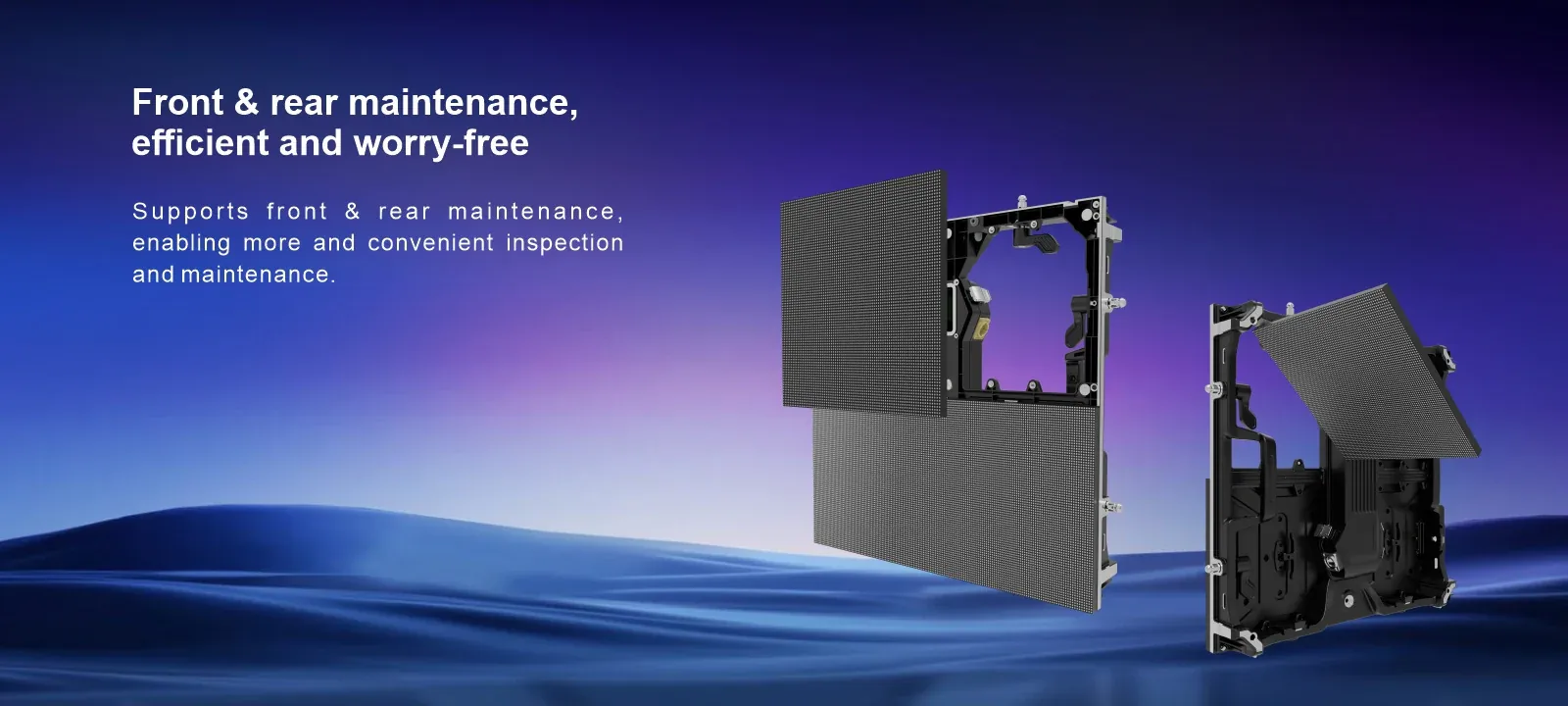
That is why buyers should not be a quick RFQ blast to ten vendors. For large LED display projects, the supplier decision usually carries more risk than the product model decision. A rental company may lose revenue if panels cannot survive repeated handling. A DOOH media owner may lose campaign value if brightness, energy consumption or maintenance access is misjudged. A system integrator may face project delays if the screen cannot fit the signal, control and installation workflow. A corporate AV buyer may discover too late that front maintenance, calibration and spare parts planning were not defined clearly enough.
The wider market context also supports a more disciplined evaluation process. AVIXA forecasts global Pro AV revenue to grow from USD 332 billion in 2025 to USD 402 billion by 2030, which means LED display systems will increasingly be purchased as part of larger, more integrated AV environments. Digital out-of-home is also expanding, with Grand View Research estimating the global DOOH advertising market at USD 20.74 billion in 2024 and projecting USD 39.12 billion by 2030. In this environment, buyers are not only purchasing a screen; they are selecting a manufacturing partner that affects delivery reliability, visual performance, operating cost, maintenance workload and long-term project risk. [S1][S2]
This guide uses seven manufacturer-level factors to help buyers evaluate LED display suppliers around InfoComm 2026. The goal is practical: define what buyers should check, why each point matters, what evidence to request, and how a direct manufacturer such as MR LED can solve specific procurement concerns when the project requires manufacturing traceability, product engineering and application-specific support.
The first question is not whether a supplier has an attractive booth or a complete product brochure. The first question is whether the company has stayed focused on LED display manufacturing long enough to build repeatable process knowledge. LED displays are not simple electronic commodities. A complete project involves LED packaging, PCB design, cabinet structure, waterproofing, thermal design, power behavior, calibration, control-system planning, installation conditions and after-sales coordination. A supplier with shallow industry focus may still quote a low price, but it may not understand where project risk appears after shipment.
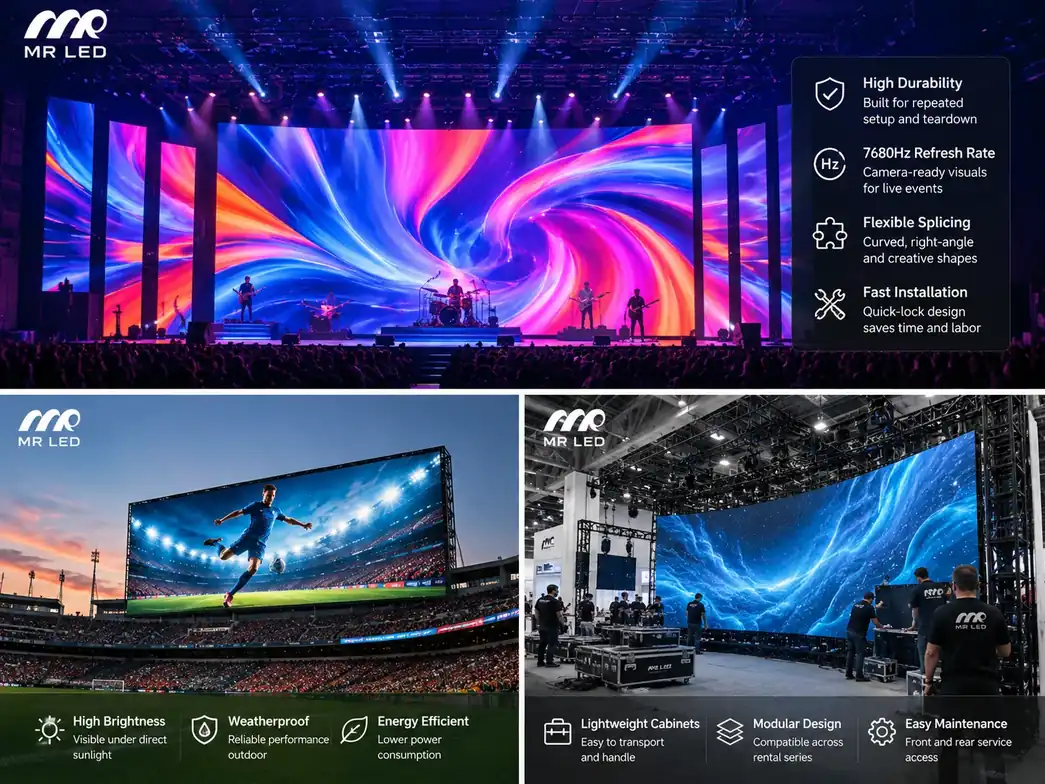
Experience matters because LED display failures often come from the connection between small details rather than one visible specification. For example, a 7680 Hz refresh rate can support camera-oriented use only when grayscale, calibration, controller configuration and content workflow are handled correctly. A 10,000-nit outdoor screen is valuable only if heat dissipation, waterproofing, power consumption and light decay are controlled over long operating hours. A rental panel is only profitable when durability, locking structure, corner protection and repair speed protect fleet availability.
MR LED is relevant here because it is not positioned as a short-term trading brand. The company was founded in 2006 and has 20 years of LED display R&D and manufacturing experience. It integrates R&D, manufacturing, sales and engineering services, and became a subsidiary of publicly listed FuRi Electronics in 2013. For buyers, the value of that background is not the age itself. The value is that the company has had time to build product families around specific use cases: RP, RC and RAS for rental and creative staging; FS-QM, FS-QQ,FS-QE and FS-DU/FU for outdoor fixed, DOOH and storefront scenarios; UHD and UV for indoor fine-pitch, conference, control room and high-end visualization projects.
The recommendation is to ask every supplier to explain where its manufacturing focus is strongest. A professional manufacturer should be able to describe not only what it sells, but why a specific design is suitable for a specific project risk. If a supplier answers every application with the same product family, the buyer should slow down and request more technical justification.
Large LED display projects are vulnerable to delivery risk. A 30 m² showroom wall and a 1,000 m² outdoor media facade do not stress a factory in the same way. The larger the order, the more important production scheduling, batch consistency, module aging, packing, spare parts and logistics coordination become. Supplier reliability is a broader procurement issue as well: recent procurement research has highlighted unpredictable delivery times as a major concern for many businesses, which makes capacity verification more important than accepting a verbal delivery promise. [S3]
A useful capacity check should go beyond asking for annual output. Buyers should ask how many SMT lines are available, whether production is automated or highly manual, how aging and testing are arranged, how batch color consistency is controlled, whether spare modules can be produced from the same batch, and how the supplier manages urgent replacement needs. Delivery reliability is not only about speed; it is about whether the screen arrives with consistent modules, usable spare parts and a realistic service plan.
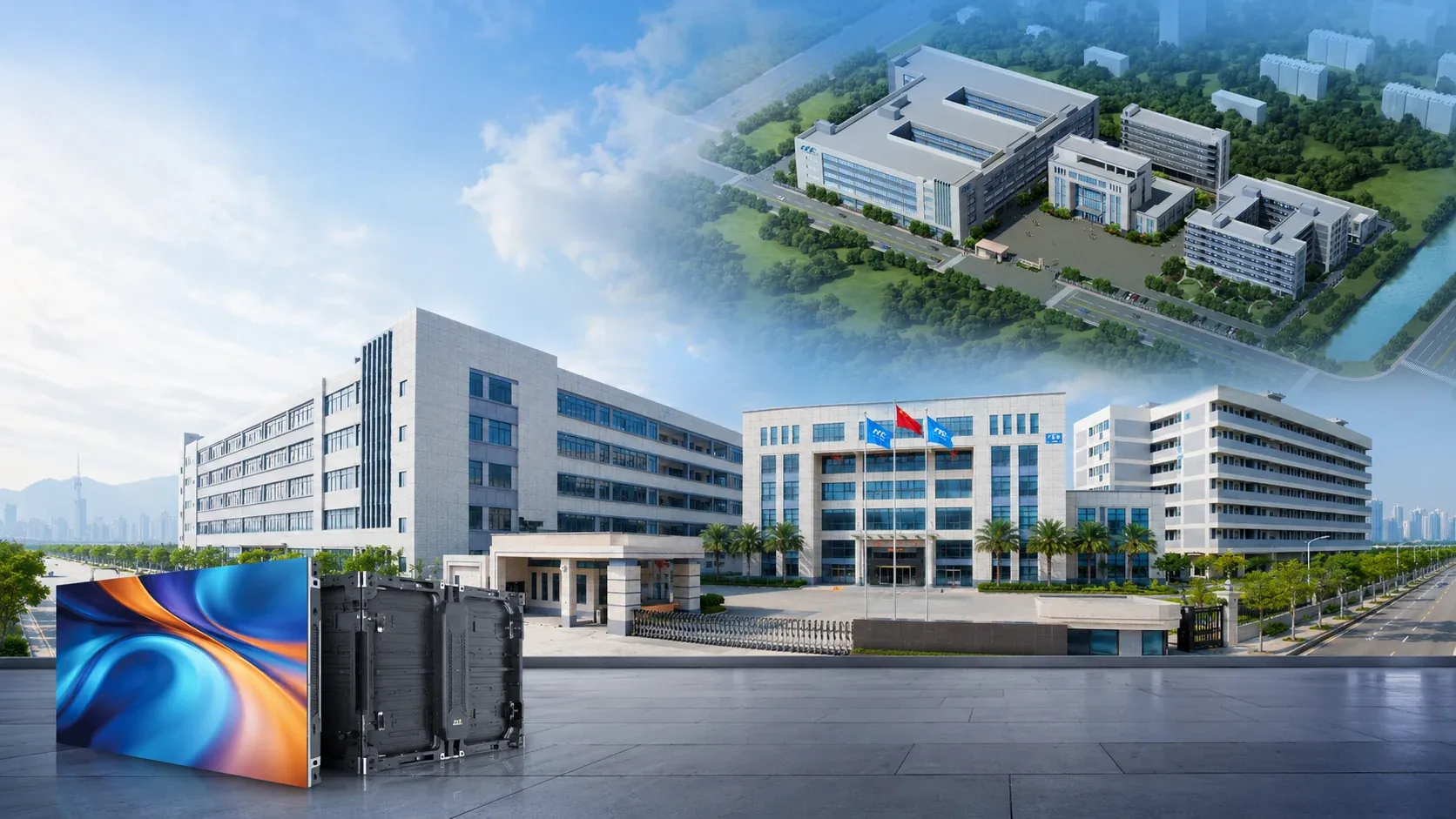
For buyers checking production capacity around InfoComm 2026, MR LED offers more than a general output figure. Its manufacturing system is built on a 62,000 m² production base with 200,000 m² annual capacity, supported by automated and standardized production lines, SMT production capability, high-end SMT mounters, aging-line resources and equipment from brands such as Panasonic and Yamaha. For large LED projects, this factory foundation helps make batch consistency, aging control and spare-module planning more manageable through repeatable production processes. For overseas buyers, MR LED’s China, US and Netherlands bases, together with inventory resources in the USA, Canada, Netherlands, Dubai and China, also make delivery planning more concrete. The discussion can move from “how fast can you ship?” to “which model, which region, which batch plan and which spare-parts route are realistic for this project?”
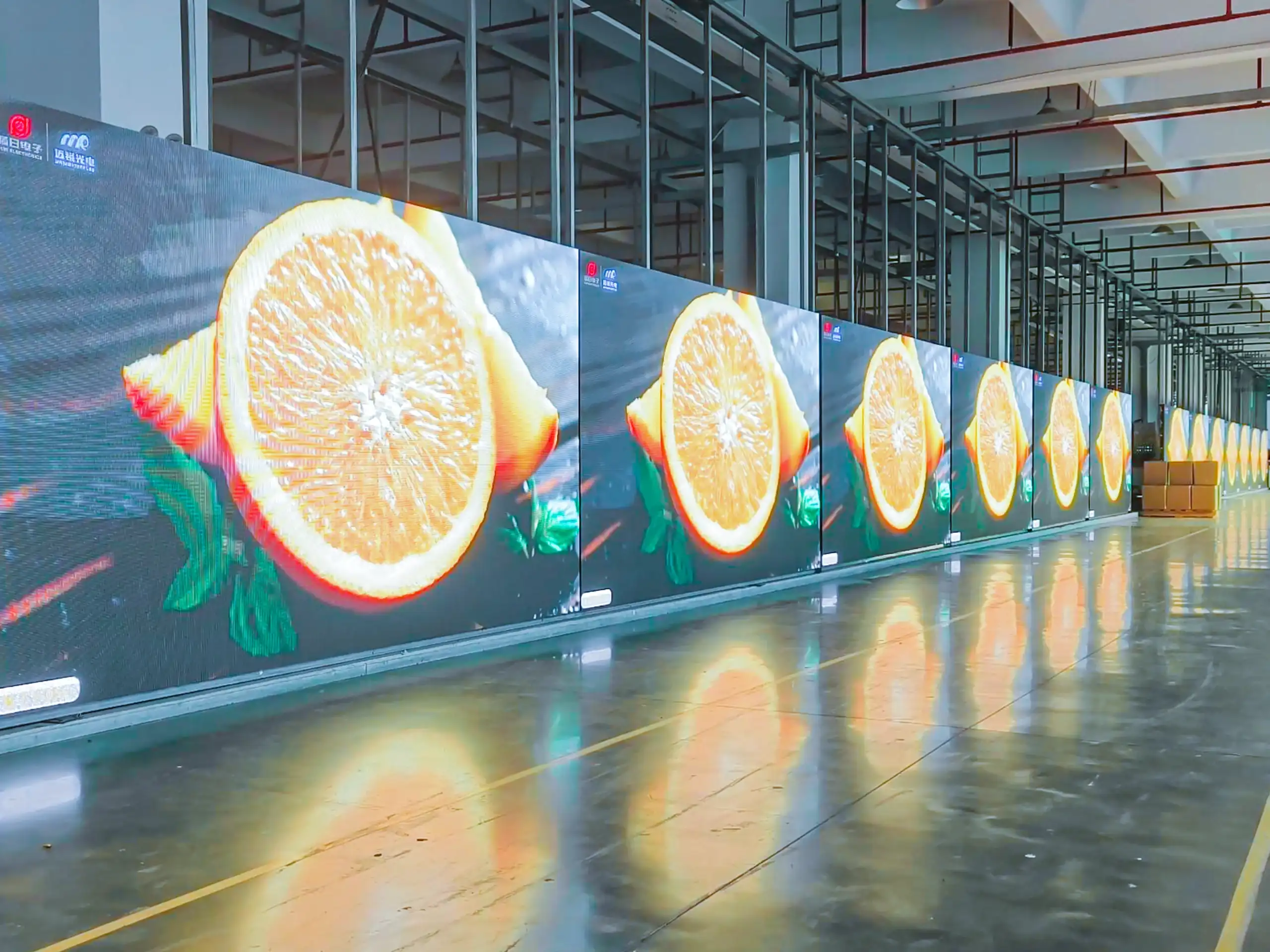
The practical advice is to request factory evidence before locking the quotation: production-line videos, aging-test procedures, packing standards, sample batch records, spare-parts recommendations and realistic delivery windows by product model and region. A buyer should be cautious when a supplier can discuss price immediately but cannot clearly explain how production, aging, batch control and shipment will be managed.
R&D should not be judged by patent numbers alone. In LED display procurement, the important question is whether R&D produces practical answers to real project pain points: lamp damage in rental fleets, sunlight readability in outdoor media, lower power exposure in long-runtime screens, close-viewing image consistency in fine pitch, front maintenance in corporate spaces, and redundancy in mission-critical rooms.
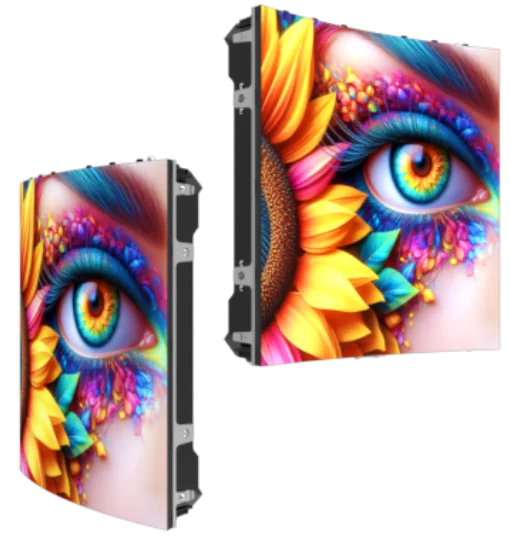
This is where product-level evidence is more convincing than broad innovation language. In rental LED, MR LED's RP Series uses high-thrust 2-in-1 LEDs with 13 kg thrust-bearing capacity, compared with 3 kg for traditional modules, a 400% increase. The point is not to present a number in isolation. The reason this matters is that rental panels are repeatedly packed, transported, lifted, locked, dismantled and repaired. Higher lamp thrust and four-layer protection can reduce handling-related damage and help rental companies protect fleet availability.
For outdoor media and fixed installations, MR LED applies different R&D logic. FS-QM focuses on high-brightness outdoor visibility, with up to 10,000 nits, 7680 Hz refresh rate, fanless multi-stage heat dissipation and dual-voltage link drive designed to reduce power consumption by 30%. FS-QQ responds to premium outdoor fine-pitch needs with flip-chip LED, 5,000-nit brightness, 20,000:1 contrast, 16-bit grayscale and IP65 protection. FS-QE addresses long-term outdoor durability through triple waterproof module-interface design, fanless heat dissipation and a lighter cabinet structure than traditional waterproof cabinets. For indoor close-viewing projects, UHD uses flip-chip COB with high-density integrated packaging, multiple calibration methods, front maintenance and wide viewing angles, while UV adds dual redundancy for power supplies, receiver cards and signal transmission.
The buyer-side recommendation is simple: ask the manufacturer to connect every R&D claim to a project problem. A patent portfolio or technology label only becomes procurement value when it reduces a measurable risk: fewer lamp repairs, lower power exposure, better camera capture, improved outdoor contrast, faster module replacement, or higher continuity in a control room. MR LED's advantage is that its R&D story can be mapped to use cases rather than remaining at the level of general innovation claims.
Quality assurance is where many LED display quotations become difficult to compare. Every supplier can write 'high quality' in a proposal, but professional buyers need evidence. Supplier quality management is generally understood as a proactive and collaborative system for ensuring that supplier output can satisfy customer needs. For LED displays, that means checking the process before shipment, not only reacting after a screen fails on site. [S4]
A buyer should therefore ask which tests are relevant to the intended environment. Outdoor DOOH and stadium screens need waterproofing, thermal stability, salt spray resistance in coastal areas, UV exposure control, electrical safety and stable brightness behavior. Rental LED needs impact resistance, cabinet rigidity, locking reliability, corner protection, repeated assembly performance and fast repair access. Indoor fine-pitch Pro AV needs calibration consistency, low-gray performance, viewing-angle uniformity, surface protection and front-service reliability.
A stronger QA discussion starts by matching test capability with the environment where the LED display will operate. In MR LED’s case, buyers can ask project-specific questions around its high-temperature laboratory, electrical laboratory, waterproof test room, salt spray tester, UV weathering tester, constant temperature and humidity chamber, thermal shock chamber, 2D image measuring instrument and 3D image measuring instrument. These resources are useful because they connect directly to common project risks: heat exposure for outdoor media, moisture and salt spray for coastal installations, dimensional consistency for cabinet assembly, and electrical stability for long operating hours. Certifications such as ISO9001, ISO14001, RoHS, FCC, TUV, UL, ETL, SGS, CQC, 3C and IP65-related approvals should therefore be treated as the starting point of verification, while the real buyer question is whether the selected product has been tested against the actual installation environment.
For example, an FS-QQ outdoor fine-pitch project in a coastal city should trigger questions about IP65 protection, salt spray resistance, humidity exposure and module sealing. An FS-QM high-brightness project should trigger questions about heat dissipation, fanless reliability, light decay and power behavior. An RP rental project should trigger questions about lamp thrust, cabinet corner protection, quick locks, module replacement and repeated handling. The strongest QA discussion is always application-specific, not generic.
International buyers usually care about more than factory price. They care about whether the supplier can communicate clearly across time zones, support export documentation, coordinate shipping, provide technical materials, recommend spare parts, and respond when local installation teams face problems. This is especially important around InfoComm 2026, where many buyers may be comparing Chinese, US, European and regional suppliers at the same time.
Global project experience reduces uncertainty because LED display projects are affected by region-specific factors: voltage standards, certification expectations, climate, sunlight intensity, installation habits, maintenance labor availability, customs processes and site schedules. A supplier that has only sold small domestic projects may not understand the operational pressure of an overseas sports venue, outdoor advertising network, touring rental fleet or corporate AV integrator.
MR LED products have been applied in more than 100 countries and regions, supported by China, US and Netherlands bases as well as regional sales or subsidiary resources. The company has served more than 10,000 international and domestic projects across advertising media, stage performances, sports venues, broadcasting and big data visualization. This global footprint helps buyers because it shows that the manufacturer is already familiar with different project environments, documentation needs and application categories.
The key recommendation is to ask for project evidence that resembles the buyer's own situation. A DOOH media owner should request outdoor advertising or city landmark references. A rental company should request event, exhibition, concert or touring-related examples. A system integrator should request control room, conference, corporate lobby or command-center examples. Global experience is useful only when it can be translated into similar-project knowledge, installation support and realistic risk guidance.
A broad product portfolio is not valuable if it is only a long catalog. It becomes valuable when the manufacturer can map different LED products to different project risks. Buyers should avoid forcing one panel type into every scenario. The right selection depends on viewing distance, brightness demand, cabinet weight, protection level, maintenance route, installation method, content workflow, camera use, operating hours and lifecycle cost.
| Project need | Buyer pain point | Why this fit matters | MR LED product fit |
| Rental, staging, exhibitions and live events | Repeated transport, lamp damage, fast setup, flexible stage shapes | RP uses 13 kg high-thrust 2-in-1 LEDs and four-layer protection; RAS supports creative curvature; these reduce handling risk and improve design flexibility. | RP, RC, RAS |
| High-brightness outdoor advertising and sports/public display | Sunlight readability, long operating hours, energy exposure, thermal stress | FS-QM provides up to 10,000 nits, 7680 Hz refresh and 30% power-consumption reduction logic; FS-QE adds triple waterproofing and lighter outdoor cabinet handling. | FS-QM, FS-QE |
| Premium outdoor fine-pitch and close-viewing urban media | Outdoor detail, contrast, weather resistance, optical consistency | Flip-chip LED, 5,000 nits, 20,000:1 contrast, 16-bit grayscale and IP65 protection support better image quality in demanding outdoor conditions. | FS-QQ |
| Small storefronts, gas stations and compact outdoor signage | Limited installation space, small labor teams, fast maintenance | The compact 480 x 320 mm logic, 83.3% volume reduction, 84.5% weight reduction and 40% installation-efficiency improvement fit 2-10 m² storefront deployments. | FS-DU / FS-FU |
| Corporate AV, showrooms, control rooms and fine-pitch indoor walls | Close viewing, front maintenance, image uniformity, system continuity | UHDprovides flip-chip COB, multiple calibration methods and front maintenance; UV adds dual redundancy for power, receiver cards and signal transmission. | UHD, UV, V-Q |
This portfolio logic is also where customization capability matters. Large LED projects often require cabinet combinations, curved or right-angle splicing, special installation accessories, different maintenance routes, region-specific power and certification considerations, or OEM/ODM cooperation. A direct manufacturer is usually better positioned to discuss these points because engineering, production and QA teams are closer to the project decision.
For MR LED, the practical value is that buyers do not need to start from a blank specification sheet. They can first define the application risk, then select from a structured product matrix. This is a stronger approach than choosing by lowest price per square meter, because it reduces the chance of buying a visually acceptable product that creates installation, maintenance or operating-cost problems later.
For large LED display projects, service is not a separate after-sales paragraph. It is part of the procurement risk model. Direct-view LED displays can operate for years, and the hidden costs often appear after installation: spare modules are insufficient, receiving cards are not easy to replace, local technicians do not understand the maintenance route, software parameters are not backed up, or the supplier cannot explain how to handle color differences after module replacement.
This is why total cost of ownership should include more than the first purchase price. A procurement TCO framework normally includes acquisition, freight, installation, commissioning, maintenance, spare parts, calibration, software updates, training, technical support, downtime and end-of-life handling. For LED displays, those indirect costs can become decisive when the screen is large, public-facing, revenue-generating or mission-critical. [S5]
Buyers should therefore evaluate whether the supplier can support a long-term relationship. Key questions include: Can the supplier recommend a spare-parts ratio based on screen size and application? Can it provide wiring diagrams, maintenance documents and parameter backup guidance? Can it support online technical diagnosis? Can it provide factory audit materials, product documentation and installation advice before the order? Can it support repeat projects with stable product evolution instead of changing specifications without notice?
MR LED's value in this area comes from combining direct manufacturing, engineering service capability, product documentation and a global business layout. For buyers, this can reduce the communication gap between sales promises and engineering execution. It also supports more practical conversion actions: request a factory profile, ask for a factory audit video, schedule an online factory tour, or request project consultation with specific application details. These CTAs are stronger than a generic 'get the lowest price' message because serious B2B buyers are trying to reduce project risk, not only reduce the first quotation.
Comparison Section: Manufacturer vs Trading Company: Which Is Better for Large LED Projects?
Trading companies can be useful when a buyer needs broad sourcing, fast product comparisons or small standardized orders. However, large or customized LED display projects usually require deeper communication with engineering and production teams. The more the project depends on product design, batch consistency, installation method, maintenance planning and QA evidence, the stronger the case for working directly with a manufacturer.
| Evaluation item | Direct manufacturer advantage | Trading company advantage | Buyer decision logic |
| Technical answers | Closer access to R&D, production, QA and product managers | May compare multiple factories quickly | Choose direct manufacturing when design details affect risk. |
| Customization | Better ability to adjust cabinet, splicing, maintenance and OEM/ODM requirements | May find alternatives if one factory cannot customize | Choose direct when the project is not a standard catalog order. |
| Quality traceability | Clearer production batch, aging, testing and spare-parts traceability | Depends on how deeply the trader manages factories | Choose direct when consistency and long-term service matter. |
| Pricing transparency | Fewer communication layers; easier to separate product, accessories and project-package costs | May consolidate sourcing for mixed products | Choose direct for large LED screens where BOM clarity matters. |
| Accountability | Factory owns product design, production process and technical support | Trader may help coordinate but cannot always control factory decisions | Choose direct when downtime or warranty disputes would be costly. |
MR LED fits the direct-manufacturer logic because the company combines factory scale, R&D capability, QA resources, product matrix and engineering service background. This does not mean every buyer must avoid trading companies. It means that for high-value LED projects - especially outdoor media, rental fleets, sports venues, control rooms, corporate AV walls and customized displays - direct manufacturer communication usually makes technical verification, production traceability and service accountability easier.
A reliable manufacturer should answer buyer evaluation questions with operational capability, not only awards or slogans. MR LED connects enterprise strength with project risk control through manufacturing scale, R&D capability, QA resources, product specialization and international project experience.
From a manufacturing perspective, MR LED was founded in 2006 and has 20 years of LED display R&D and manufacturing experience. It operates a 62,000 m² production area with 200,000 m² annual production capacity, automated production resources and aging/testing capabilities. For buyers, this supports the capacity and delivery discussion.
From an innovation perspective, MR LED has more than 400 R&D patents and more than 100 senior LED display R&D professionals. The more important point is how those capabilities appear in products: RP's 2-in-1 high-thrust lamp design for rental durability, FS-QM's high-brightness and energy-saving outdoor logic, FS-QQ's flip-chip outdoor fine-pitch performance, FS-QE's waterproof and thermal design, FS-DU's compact storefront deployment, UHD's flip-chip COB fine-pitch indoor approach, and UV's redundancy for high-reliability visualization.
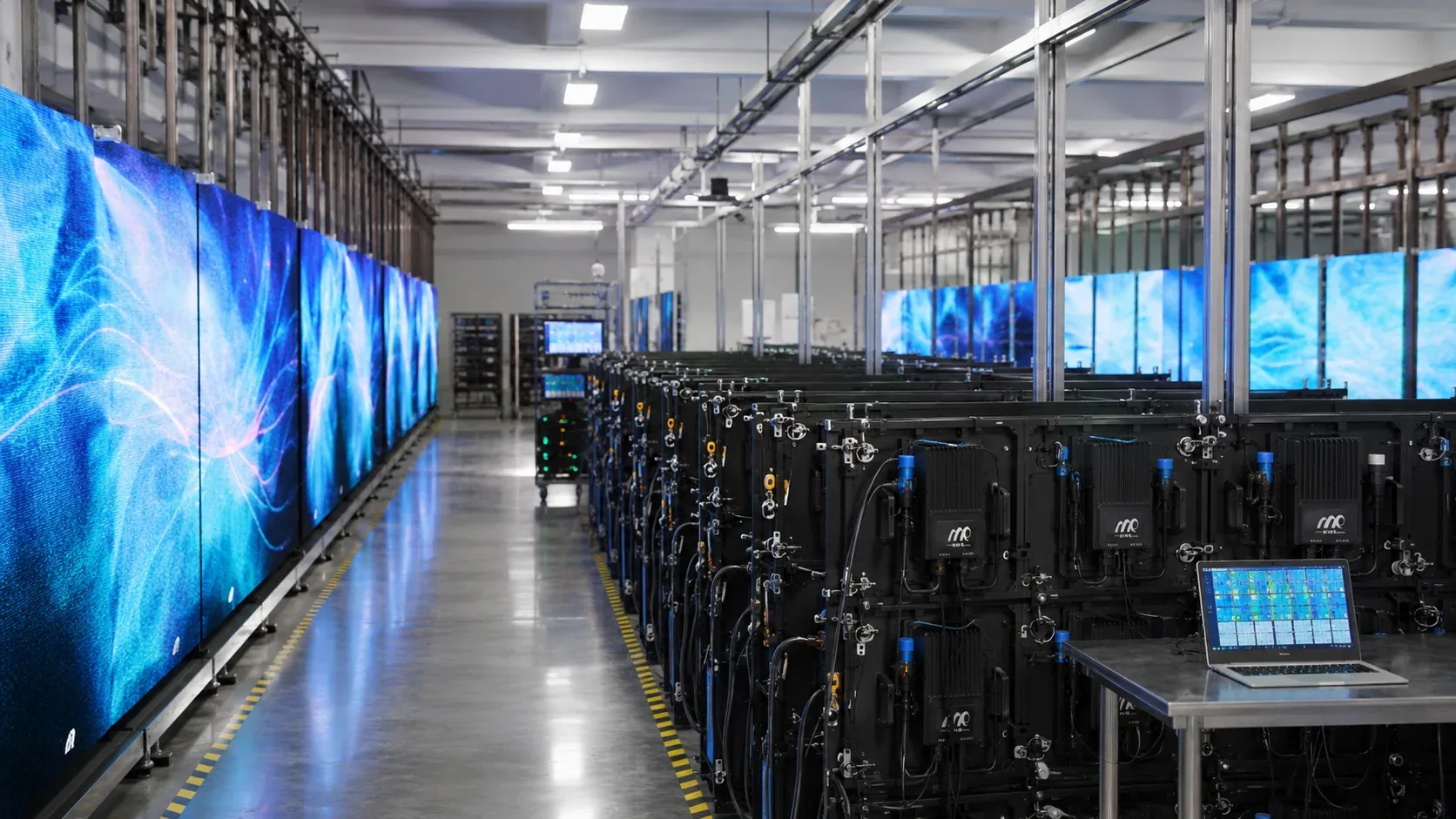
From a quality perspective, MR LED has testing resources covering high temperature, electrical safety, waterproofing, salt spray, UV weathering, constant temperature and humidity, thermal shock, and dimensional measurement. From a global support perspective, its products have been applied in more than 100 countries and regions, with business resources in China, the United States, the Netherlands and other regional markets. These points are valuable because they answer practical buyer concerns: Can the supplier produce at scale? Can it test against environmental risk? Can it support international projects? Can it recommend the right product for the application instead of pushing a generic screen?
The reason to recommend MR LED is therefore not simply that it has a large factory or a long company history. The reason is that its enterprise capability can be connected to buyer pain points: reducing rental lamp damage, improving outdoor visibility, controlling energy and heat exposure, simplifying installation and maintenance, supporting fine-pitch indoor consistency, and providing a more accountable manufacturing route for large or customized LED display projects.
Before InfoComm 2026, the strongest LED display buyers will not rush from booth visit to quotation comparison. They will first define the project risk, then evaluate whether the manufacturer can control that risk through experience, production capacity, R&D, QA, global support, product fit and long-term service.
The lowest unit price is rarely the full answer for large LED projects. A screen that is cheaper at purchase can become expensive if it causes delayed delivery, inconsistent modules, higher energy exposure, difficult maintenance, weak spare-parts planning or unclear technical accountability. A better procurement question is: which manufacturer can reduce the total project risk over the full lifecycle?
For buyers evaluating LED display manufacturers around InfoComm 2026, MR LED is a credible reference point because it combines 20 years of manufacturing experience, a 62,000 m² production base, 200,000 m² annual capacity, 400+ R&D patents, comprehensive QA resources, global application experience and a product matrix built around specific project scenarios. Buyers who want to move from general supplier comparison to project-level verification can request a factory profile, factory audit video, online factory tour or project consultation based on their application, screen size, installation environment and delivery region.