Fine-pitch LED screens provide detailed images at close viewing distances, but their dense pixel structure requires careful maintenance. Small dust particles, humidity, static electricity, improper cleaning, or unstable power can affect image uniformity and component life. MR LED’s UHD, UV, and FS-QQ Series are designed for high-resolution indoor and outdoor applications, and each product type should be maintained according to its installation environment and surface protection structure.
Stable temperature, humidity, and power supply are essential for fine-pitch LED displays. Indoor fine-pitch products such as UHD and UV should operate in a clean, dry environment with controlled ventilation and stable voltage. For outdoor fine-pitch products such as FS-QQ, IP65 protection and fanless heat dissipation help resist weather, but installers still need to ensure proper drainage, cable sealing, grounding, and power protection. Powering on the display regularly helps reduce internal moisture accumulation, especially in humid climates.
Cleaning should match the product structure. For standard fine-pitch LED modules, use a soft antistatic brush or specialized low-suction cleaning equipment to remove dust. Do not spray liquid directly onto modules. For UHD Series with flip-chip COB packaging, the integrated surface provides stronger protection than traditional exposed-lamp structures, but cleaning should still be gentle and non-abrasive. For outdoor FS-QQ screens, cleaning should follow the waterproofing design and avoid damaging the module interface or surface coating.
Fine-pitch LED screens are often used in control rooms, corporate showrooms, broadcast areas, and premium advertising spaces, where even small color differences are visible. Periodic calibration helps maintain brightness and chromaticity consistency across modules. UHD and UV Series support point-by-point brightness and chromaticity calibration, automatic Gamma calibration, and seam bright/dark line calibration. These processes help the screen remain visually uniform as it ages.
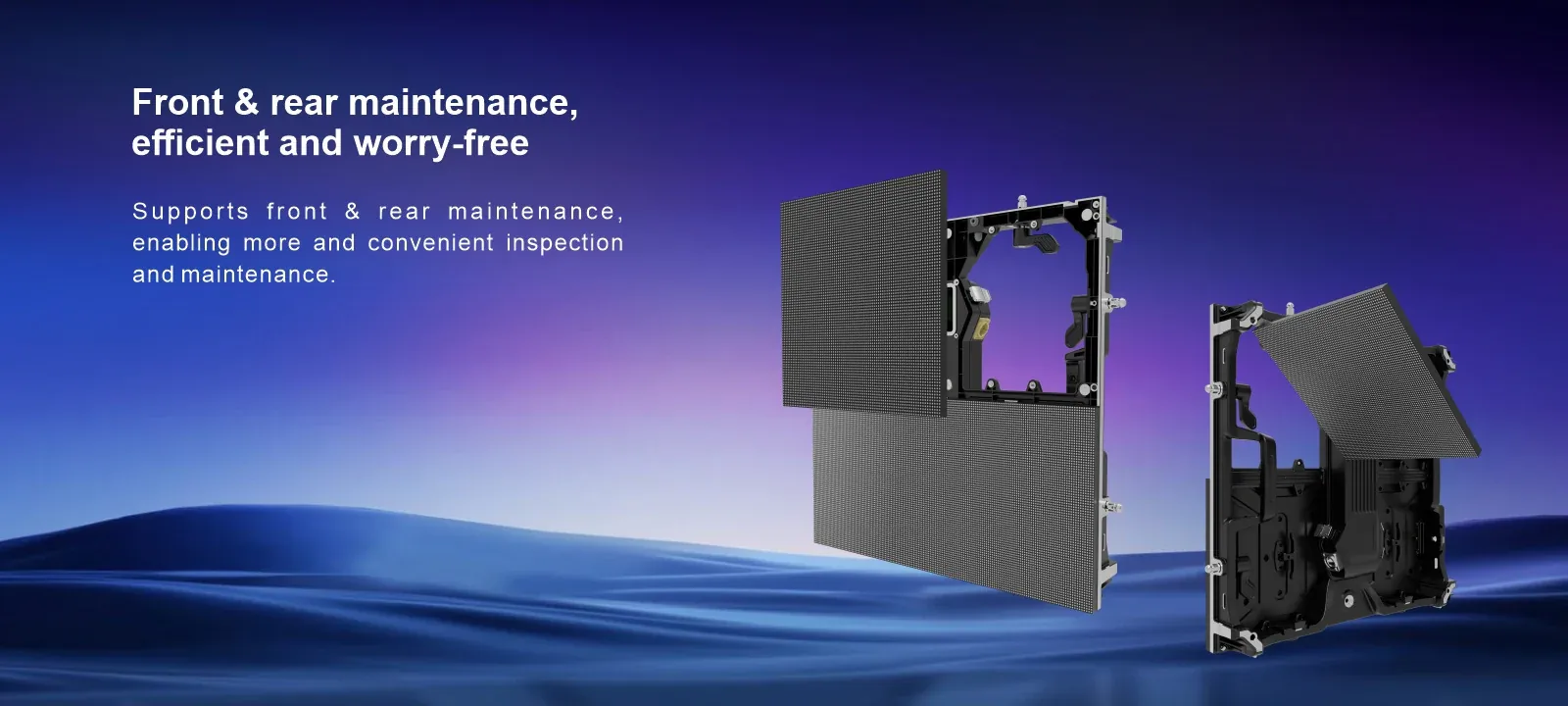
Operators should keep spare modules from the same production batch whenever possible. This makes replacement less visible and reduces the risk of color mismatch. Front maintenance structures in UHD, UV, and FS-QQ products allow technicians to service the screen efficiently without dismantling the full installation. A strong maintenance plan combines environmental control, careful cleaning, regular calibration, spare module management, and proper power protection so the fine-pitch LED display can maintain long-term image quality.