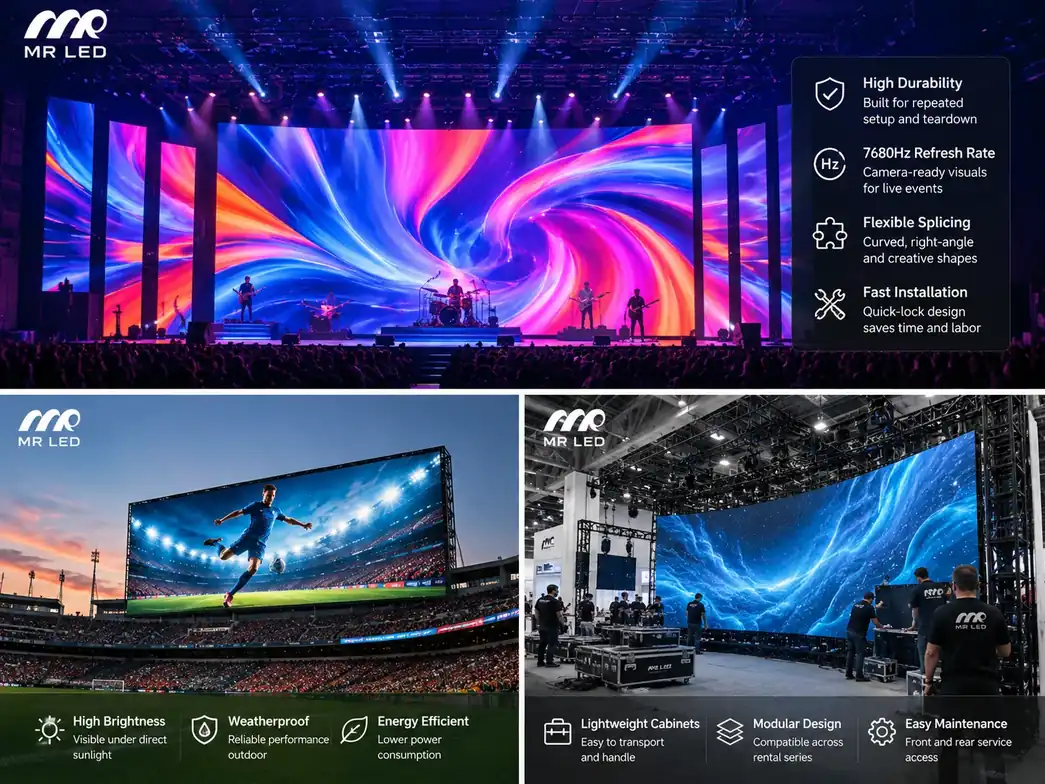
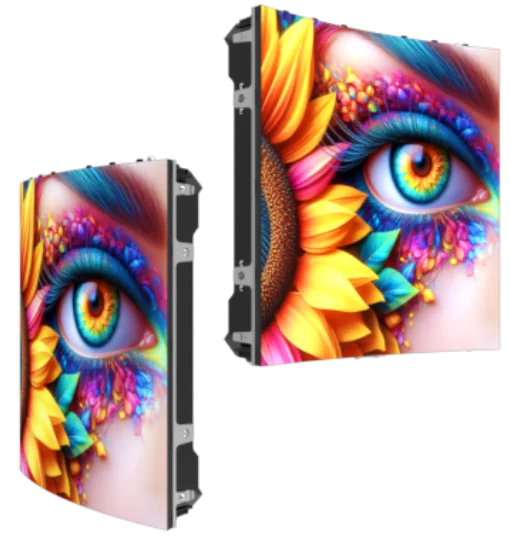
An LED panel screen is a modular visual system made from LED modules, cabinets, driver ICs, power supplies, receiving cards, control systems, and structural components. Each pixel combines red, green, and blue light to render full-color video or image content. For large-format displays, the engineering challenge is not simply lighting up pixels; it is keeping brightness, color, heat, waterproofing, and signal transmission stable across a large surface. MR LED designs its product lines around these technical relationships.
Pixel pitch is the distance between the centers of adjacent pixels. A smaller pixel pitch creates higher resolution and supports closer viewing, but it also increases requirements for thermal control, calibration, and surface protection. FS-QQ, positioned as an outdoor fine-pitch product with P1.25, P1.56, and P1.95 options, is suitable for close-view outdoor applications such as brand advertising walls and rail transit platforms. For long-distance outdoor advertising, a wider-pitch high-brightness product such as FS-QM may be more efficient.
Brightness affects visibility, but contrast and grayscale determine how much detail remains visible in real use. FS-QM provides up to 10,000 cd/m² brightness and 15,000:1 contrast for sunlight-readable outdoor display. FS-QQ provides 20,000:1 contrast and 16-bit grayscale for detailed outdoor fine-pitch content. For indoor high-definition applications, UHD Series uses flip-chip COB packaging and multiple calibration processes to support uniform images, wide viewing angles, and refined visual performance.
Heat and moisture are two major causes of LED display failure. Outdoor products such as FS-QM, FS-QQ, and FS-QE use fanless thermal structures, multi-stage cooling fins, waterproof cabinets, and module interface protection to improve long-term stability. FS-QM’s aluminum-plastic bottom shell supports consistent heat distribution and double-sided potting, helping improve heat transfer and waterproofing. FS-QE uses triple waterproof protection at the module interface to reduce dust and moisture ingress.
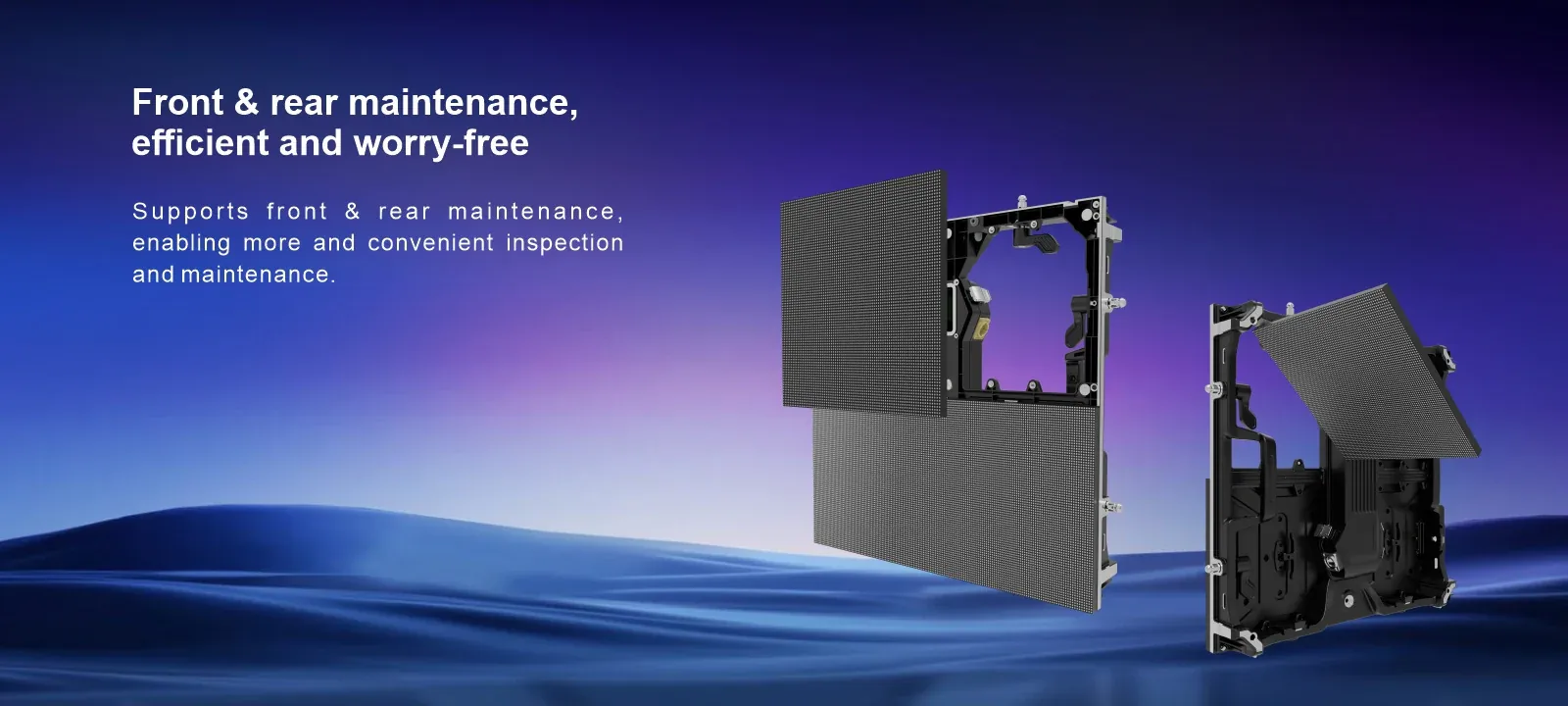
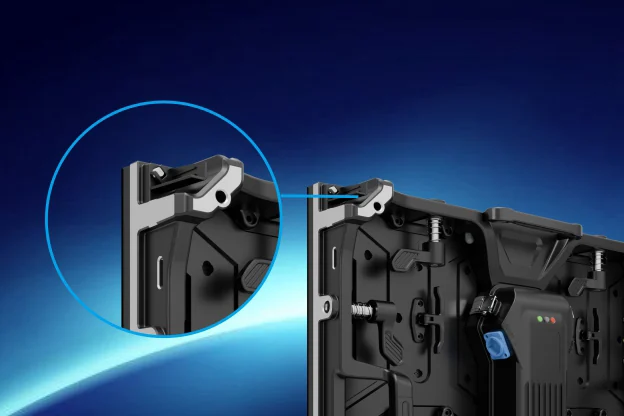
A large LED panel screen should look like one continuous canvas. Factory calibration aligns brightness and color so that modules do not appear mismatched. Maintenance design is equally important: front and rear access, modular replacement, spring locks, quick-connect structures, and spare modules reduce service time. Whether the screen is used for a storefront, stadium, transit hub, control room, or outdoor billboard, the best technical result comes from matching the component structure to the application environment.