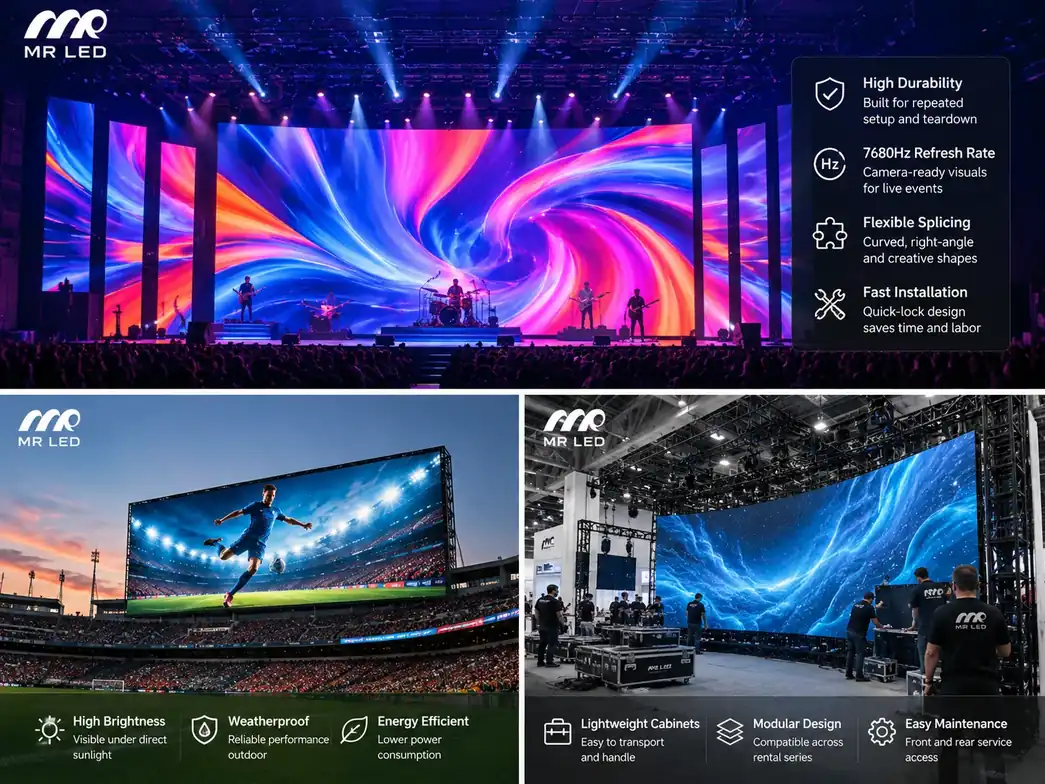
Touring events often move between arenas, exhibition halls, and temporary outdoor venues within a short period of time. Because of this, display systems are expected to maintain stable operation even after repeated transportation and installation. At MR LED, we pay close attention to cabinet durability, connection stability, and visual consistency when developing solutions for stage rental projects. For event organizers, image quality is important, but long-term operational reliability is equally critical. A system that performs well in one venue but becomes difficult to maintain during multi-city deployment can create unnecessary downtime and labor pressure for technical teams.
In large-scale concerts and touring productions, lighting conditions can change constantly during a performance. A professional rental LED display should provide sufficient brightness control to adapt to dark indoor stages as well as partially lit environments. Refresh rate is another important specification because cameras used for broadcasting or live streaming may capture flickering if the display output is unstable. We often see production companies requesting higher refresh configurations to support close-range filming during music festivals and corporate events. Color uniformity also matters because uneven visual output becomes noticeable when multiple cabinets are combined into one large stage background.
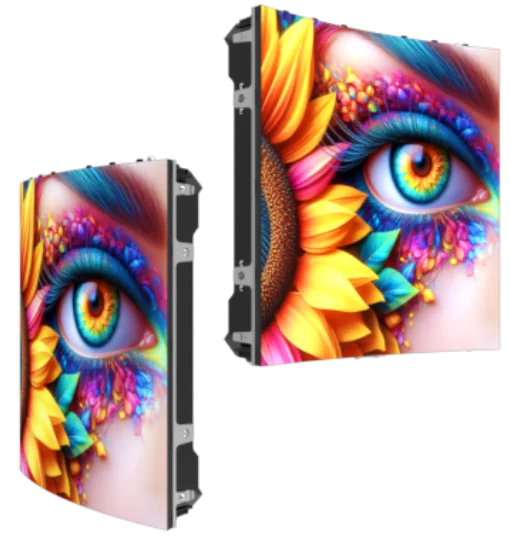
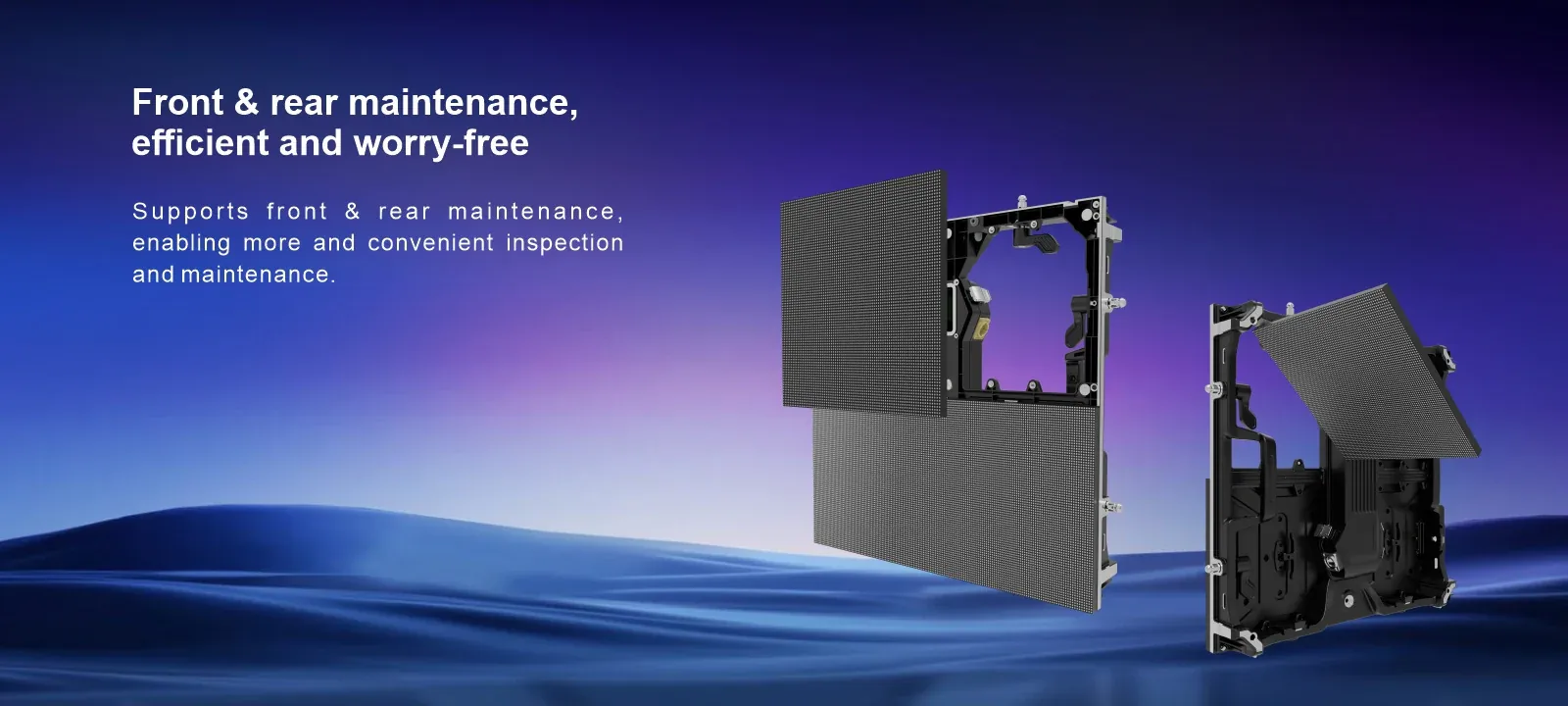
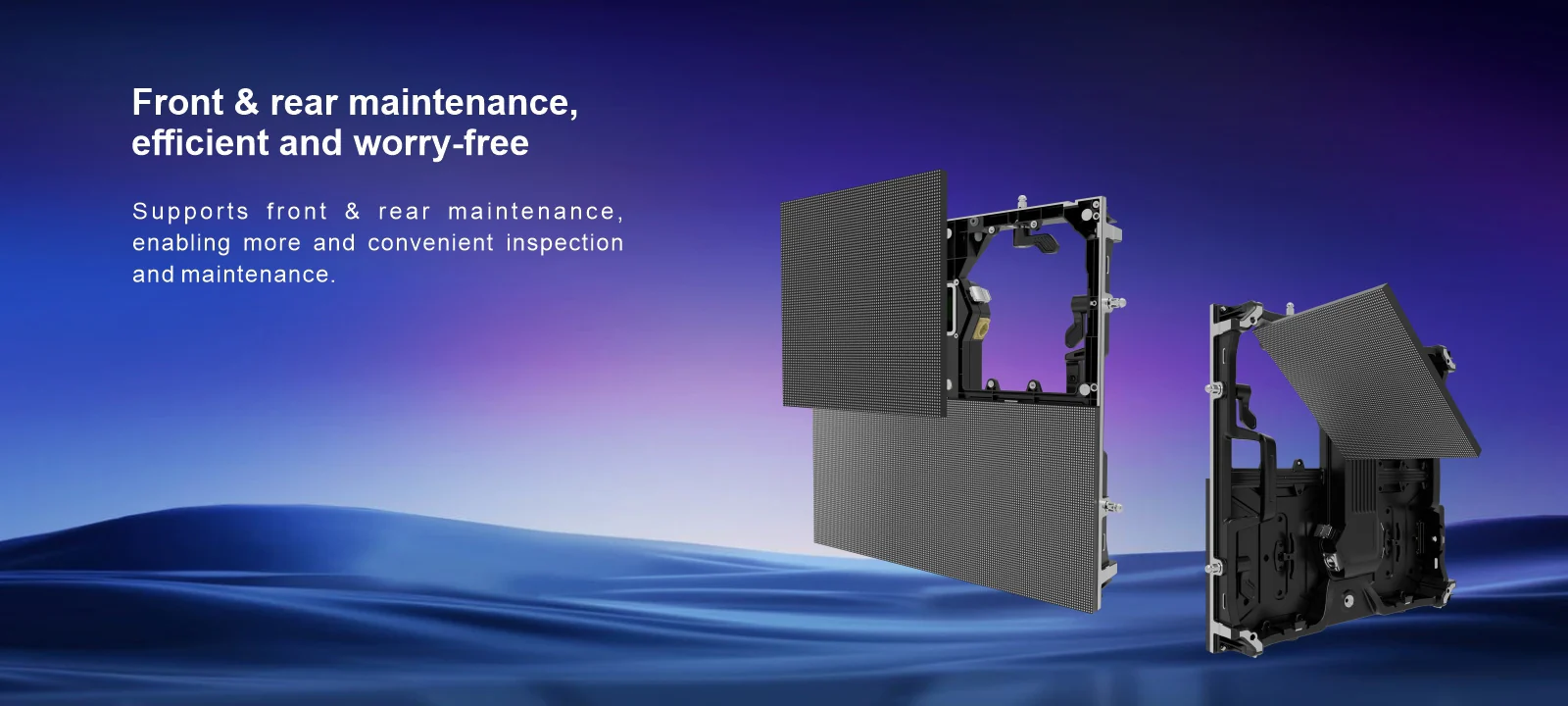
A dependable rental LED video wall is not only judged by picture performance. Mechanical structure plays a major role during touring applications where installation speed directly affects project schedules. Cabinet structure, locking accuracy, and reinforced protection are commonly preferred because they reduce transportation load and simplify rigging work. Front and rear maintenance access can also improve efficiency when technicians need to replace modules during tight event preparation periods. In our RC Series design, curved locking support and precision cabinet alignment are integrated to help reduce visible gaps between panels, with quad-layer protection structure, up to 40% improved installation efficiency, front and rear maintenance access, and support for -5° to +10° curved splicing. It also features chamfered connectors and dual signal input design, making these structural details practical for event companies handling frequent assembly and dismantling across different locations.
For touring projects, technical specifications should always be evaluated together rather than individually. Brightness, refresh rate, cabinet weight, locking precision, and maintenance access all influence the operational experience of a display system. A reliable rental display video wall should support stable visuals while remaining practical for transport and repeated installation. In many touring, stage rental, exhibition, and event production projects, a flexible rental LED display configuration can also help organizers adjust screen layouts according to venue size and stage design requirements. At the same time, MR LED continues refining cabinet structure and application adaptability so production teams can manage touring schedules, exhibition setups, and event operations more efficiently without adding unnecessary complexity to on-site operations.