Outdoor fine-pitch LED displays provide sharper visuals, but they also create new engineering challenges. Smaller pixel pitch means more LEDs, more heat per square meter, tighter calibration requirements, and higher sensitivity to moisture or physical damage. MR LED’s FS-QQ Series addresses these challenges through flip-chip LED technology, high contrast, fanless thermal design, IP65 protection, and front and rear maintenance.
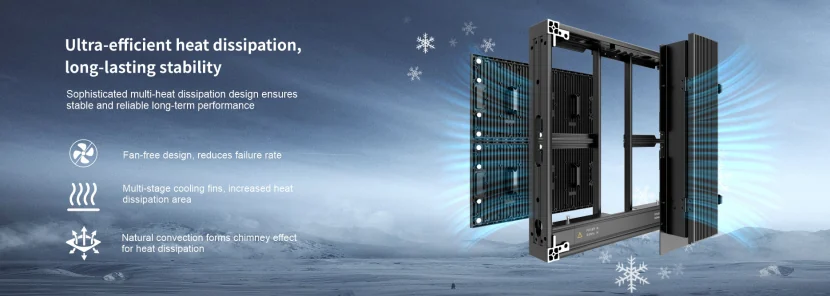
Fine-pitch modules generate concentrated heat, which can accelerate light decay and color inconsistency if not managed properly. FS-QQ uses thermal materials, multi-stage cooling fins, and fanless natural heat dissipation to improve stability. Flip-chip LED technology also helps heat transfer more efficiently and supports higher, more stable driving current. This is important for outdoor fine-pitch displays that need to operate for long hours in direct or changing sunlight.
High-resolution outdoor displays are often used in premium locations, so optical performance must be stable and refined. FS-QQ provides up to 20,000:1 contrast and 16-bit grayscale, helping the screen show deeper blacks, smoother gradients, and clearer image detail. Reduced surface reflection and improved light uniformity help prevent the washed-out look that can occur when sunlight hits a screen directly.
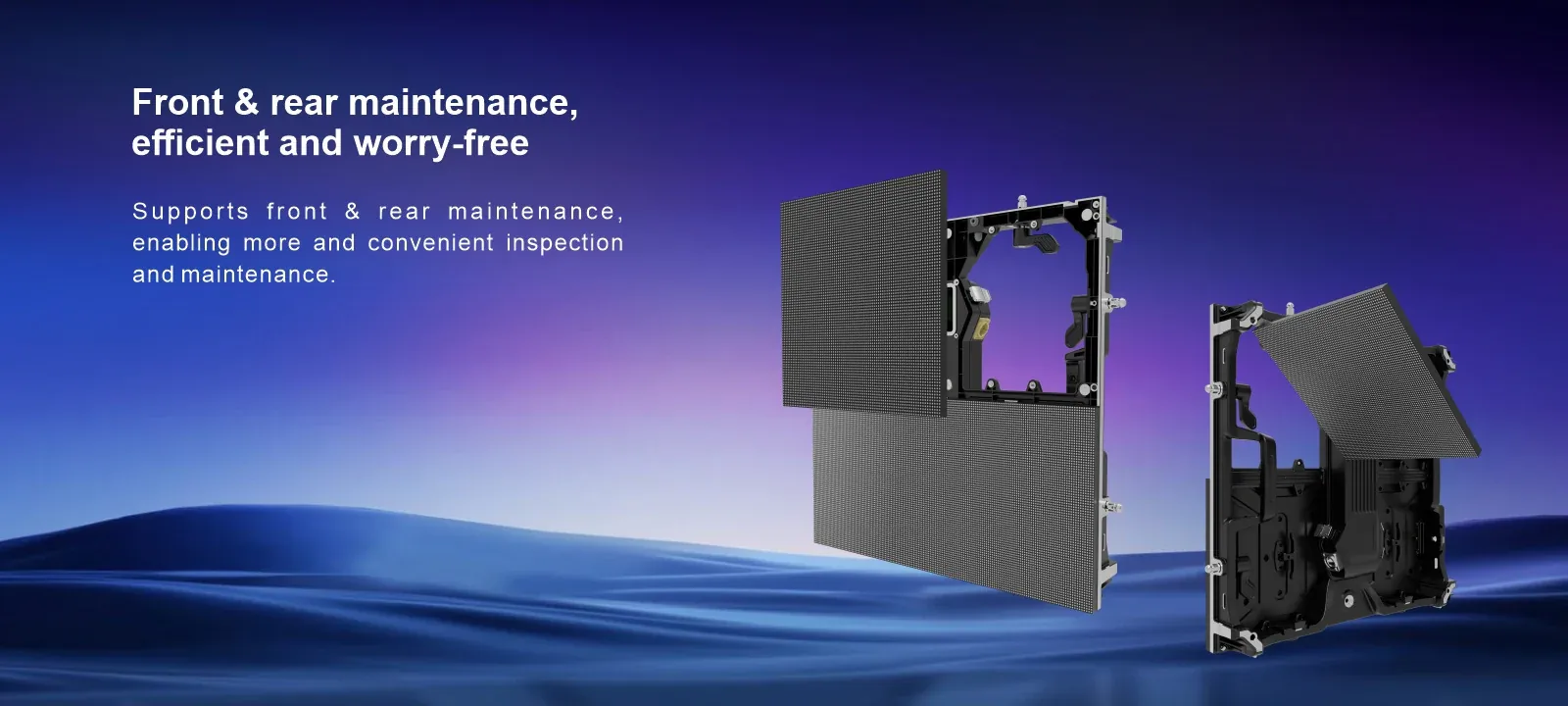
Outdoor fine-pitch screens need strong sealing because small components are more vulnerable to moisture and dust. FS-QQ’s IP65 protection and fully waterproof cabinet allow outdoor bare installation in demanding environments. Front and rear maintenance also helps service teams replace modules or inspect components efficiently, which is important for transit platforms, smart city screens, and brand walls where downtime affects public communication or advertising value.
A single dead pixel is more noticeable on a close-view fine-pitch screen than on a long-distance billboard. For this reason, manufacturing quality control matters. MR LED applies AOI inspection to solder joints and order-level X-ray spot checks, helping reduce hidden assembly issues. For high-resolution outdoor projects, success depends on a balance of pixel density, heat dissipation, waterproofing, calibration, and manufacturing consistency rather than pixel pitch alone.